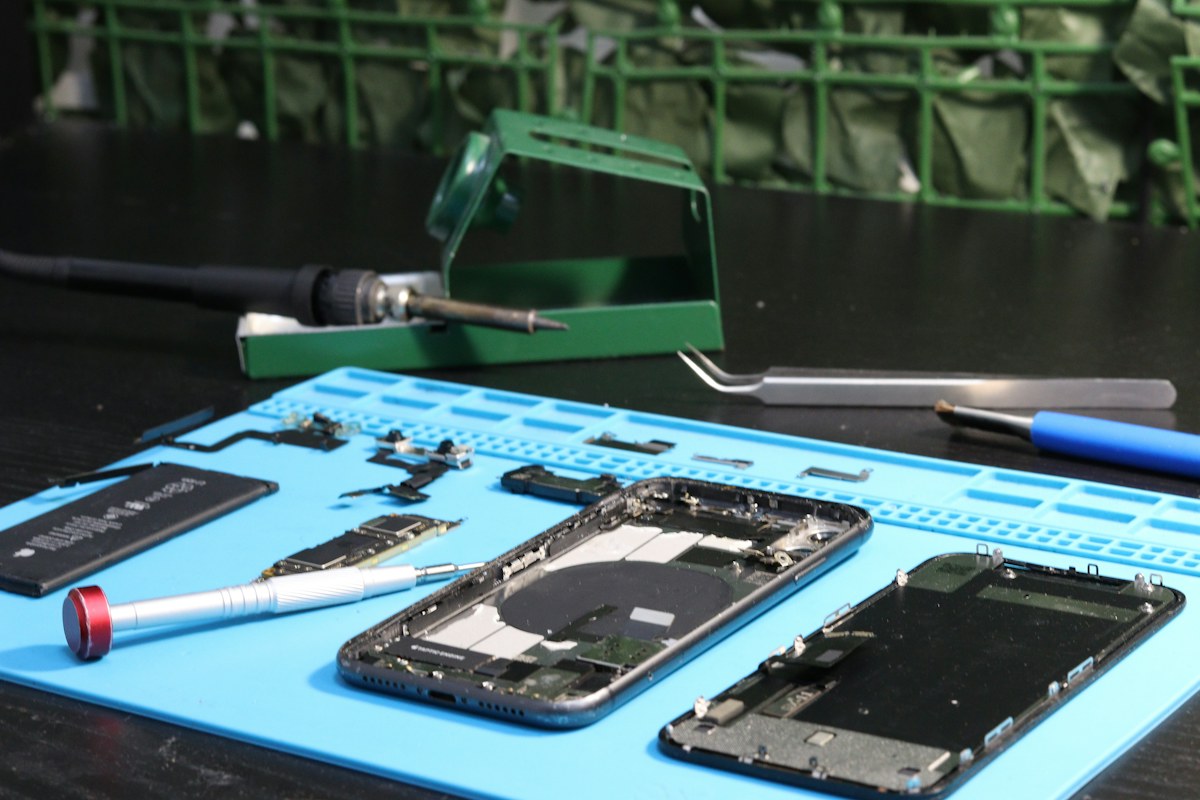
Repair & reuse
Prepare One Item for a Repair Café Visit
A useful fault description, the right parts and a realistic question make a repair visit easier to organize.
Treat tool borrowing as a complete logistical exercise rather than a casual favor, balancing scope, physical fit, handover agreements, and return schedules.
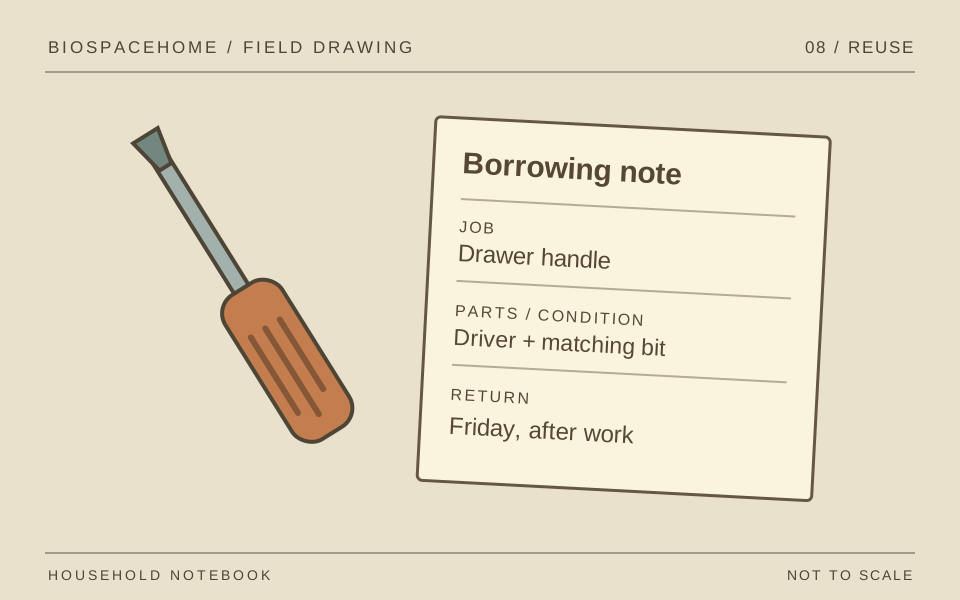
A small repair can turn into a shopping trip before the job is properly understood. I would decide what needs doing before deciding which tool to borrow. A precise request helps both people: the borrower gets equipment suited to the task, and the owner knows where it is going, how it will be used and when it should come back. Planning the return belongs at the beginning.
Borrowing a tool transfers temporary physical access, but it does not confer permission or the skill to use it. Establishing clear boundaries before any hardware changes hands prevents misunderstandings between neighbors, reduces the risk of accidental damage, and gives both people a clear return plan. By mapping out logistics early, you protect both your project timeline and your relationship with the equipment owner.
Imagine a loose drawer pull that appears to need only a screwdriver. A photograph of the screw head, the available clearance and the fitting’s instructions may show which driver is needed—or reveal that something else is loose. A precise request is easier for a lender to answer. It also lets you decline equipment you cannot use comfortably instead of accepting an impressive kit and hoping the right part is inside.
Saying you need tools is a difficult request for a neighbor to answer helpfully. Saying you need to tighten the loose fasteners on two specific drawer pulls invites a much more precise response. I suggest photographing the head of the fastener, the surrounding space, and any manufacturer instructions you have on hand. You may discover through this visual check that the task calls for a simple manual driver with a correct-fit bit rather than an unfamiliar power kit with a dozen accessories you do not need.
Precision in your request helps the owner determine if their equipment matches your specifications. If you need a manual driver for a specific screw head, stating that dimension upfront avoids a wasted trip. Vague requests lead to mismatched hardware, stripped screw heads, and unnecessary frustration for everyone involved in the exchange.
The environmental reason to borrow is straightforward: sharing something used infrequently can avoid a purchase, as noted by the EPA regarding waste reduction and reuse. However, it does not follow that you should attempt every household task yourself. Work on live electrical systems, gas lines, structural elements, or anything you cannot safely identify belongs with a qualified professional. In a rental property, always establish explicit permission from the landlord or property manager before starting any modification.
For a small manual tool, establish exactly what should come back with it. A driver with interchangeable bits may look complete even when the one useful bit is still sitting on a workbench at your helper's house. Lay the parts out on a clean towel and take a handover photo with the owner's explicit agreement. Ask whether any included accessory is a consumable item that you should replace if it wears down, and confirm how the owner prefers the tool to be cleaned before return.
Inspect the equipment for existing wear before you take possession. If the handle is cracked, the shaft is bent, or the bit is already worn down, point it out clearly before loading it into your bag. Acknowledging existing flaws prevents disputes when the item is returned and maintains mutual confidence.
Stop using the tool immediately if it slips, binds, or does not fit the fastener securely. Extra physical force is a poor substitute for the correct size or clear instructions. Forcing a poor fit risks damaging the fastener or tool. Return to the instructions or ask for help before continuing.
Treating a borrowed item with respect means integrating its return into your daily routine. Make an entry in the same digital or physical calendar you use for your regular appointments. Include the owner's full name, the agreed return time, and a note regarding whatever packaging or case keeps the small parts together so nothing gets misplaced in a transitional storage spot.
Project timelines often slip when unexpected complications arise during a repair. If you realize you will miss the agreed return window, notify the owner immediately rather than waiting for them to ask. Proactive communication maintains trust and keeps minor favors from turning into social frictions.
Keep the borrowed items stored safely away from household foot traffic while they are in your custody. Leaving tools on a shared workbench or the floor increases the risk of loss, tripping hazards, or accidental contamination by moisture and dust, which can compromise delicate moving parts before they head back home.
Imagine a neighbor one floor up has the exact manual screwdriver you need, while a distant municipal lending library maintains a large kit that is only accessible during your normal working hours. The first arrangement is clearly a better practical fit for an immediate, minor task, even if the library features a more impressive overall catalogue. Distance, opening hours, and formal eligibility belong directly in your decision-making process.
Institutional lending networks operate under specific eligibility rules. For example, the Berkeley Public Library tool lending program limits borrowing privileges to local residents and property owners over eighteen years of age, requiring specific proof of identity and adherence to their current catalogue and reservation guidelines. Understanding these parameters prevents wasted travel and administrative delays.
For future planned projects that require specialized equipment you cannot source locally, a structured library reservation process may be ideal. Weighing the travel time against the urgency of the repair helps you choose the most efficient channel without relying on generic convenience assumptions or outdated neighborhood customs.
For a planned Saturday task, I would compare two complete arrangements on paper: when the tool can be collected, what must be brought for eligibility, when it is due back, and whether help is available during that window. A neighbour’s tool may be unavailable exactly when you need it; a library reservation may suit a planned date well. The comparison is about the whole borrowing trip, including return, not the number of tools on offer.
If several neighbors in your building or immediate street keep asking to borrow the same specialty tool, record that pattern before proposing any shared purchase. Notice how often the item is requested and whether the demand clusters around specific seasonal maintenance cycles like spring pruning or autumn gutter clearing.
Decide collectively who will store the item, how future borrowers will locate the operating instructions, and what financial or logistical process will handle repairs if the tool breaks. A clear agreement prevents informal sharing systems from collapsing under ambiguous responsibilities.
A small, well-maintained object with a reliable return route and a designated storage spot can do far more useful work for a community than a crowded cupboard full of abandoned items that nobody can locate when a job arises unexpectedly on a busy weekend.
If a fastener will not move with the correctly matched tool, stop rather than increasing force. Recheck what the fitting’s instructions say and whether the task is actually the one you expected. A stuck screw is a new problem, not permission to improvise an extraction method using someone else’s driver. Describe what happened to the owner or a suitable repairer and decide whether further work belongs with them.
Also check whether the workspace lets you use the tool as intended. If you cannot see the fastener, reach it comfortably or maintain the position shown in the instructions, postpone the job and improve access safely. Do not climb onto unstable furniture or remove a surrounding fitting just to make the borrowed tool reach. Sometimes the correct decision is to return it unused.
If inspection reveals that the task exceeds your initial scope or requires specialized extraction hardware, return the borrowed tool promptly with an honest update. Acknowledging your limits preserves the integrity of the equipment and protects the structure you are attempting to repair from compounding accidental damage.
The specific job description, exact model or fastener size, all included parts, and the agreed return date. Add cleaning instructions or consumable replacement agreements if applicable.
Frequent use, poor access to local lenders, personal ergonomic fit, or specific safety requirements can justify owning the correct item. Compare your real pattern of use against the friction of borrowing.
Stop working immediately, secure all broken pieces, and inform the owner right away. Discuss a fair replacement or repair plan rather than attempting a hidden makeshift fix.
Institutions like the Berkeley Public Library require proof of residency or property ownership and verify that borrowers meet age requirements, following specific local catalogue and reservation policies.
Handover photographs record the exact physical condition and completeness of the kit, preventing misunderstandings about existing wear or missing accessories when the item is returned.
Treating tool borrowing as a disciplined project management task protects your time, preserves neighborly trust, and keeps your household repairs grounded in realistic effort and safety.
Have a correction? Contact the editors.
A useful fault description, the right parts and a realistic question make a repair visit easier to organize.
Inspect the fabric, preserve the position and choose a manageable repair for an ordinary adult shirt.
Match usable items with an actual recipient instead of transferring an unresolved sorting job to somebody else.