Repair & reuse
Prepare One Item for a Repair Café Visit
A useful fault description, the right parts and a realistic question make a repair visit easier to organize.
A care label, a clear drying surface, and a small handover note can turn an awkward laundry job into a routine worth keeping.
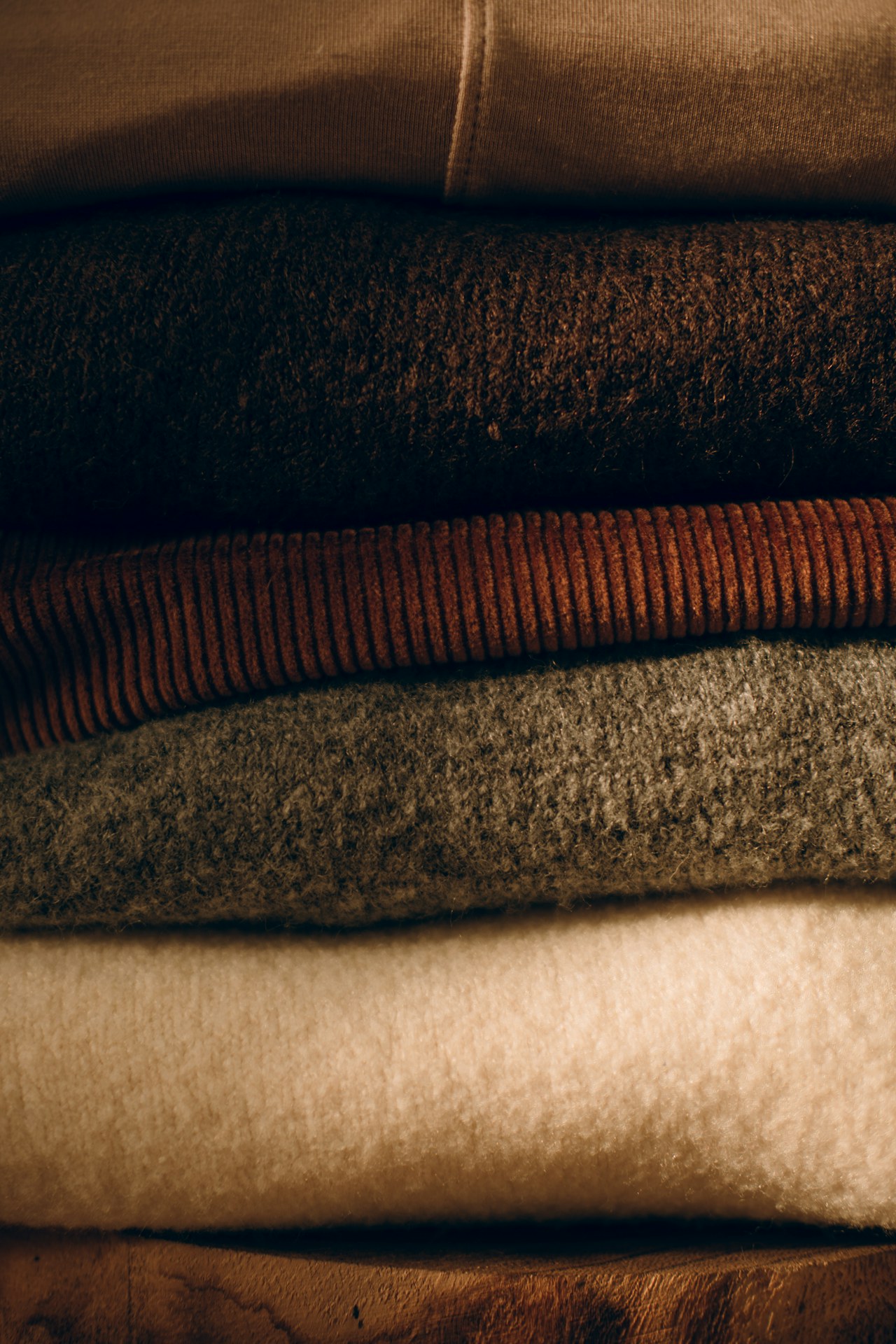
The first thing I would check is not the washing-machine dial. It is the place the sweater will occupy afterward. Picture a small flat on a Saturday morning: the kitchen table is needed for lunch, the drying rack already holds towels, and a navy wool sweater has joined the ordinary laundry basket. This is a planning example, but the conflict is familiar. A garment can have perfectly readable care instructions and still be awkward to care for in the room available.
I approach that sweater as an object I want to keep useful. That means reading its particular instructions, deciding whether a wash is needed, and following the job all the way back to the drawer. A successful routine should be understandable to the next person who handles it, too. What follows is my way of organizing those decisions, with wool-care guidance from Woolmark and care-label explanations from consumer authorities. It is not a claim that every knit needs the same wash, or that a home treatment can rescue every damaged garment.
I would turn the sweater inside out and photograph both the fiber information and the care label before choosing a method. A tag saying wool tells me something about the material. It does not tell me everything about the finished garment, its construction, or its permitted treatment. I want the instruction that applies to the item in my hands, not a reassuring instruction remembered from another sweater. If the text is faded, I would look for the maker and style details rather than treating the missing information as permission to experiment.
The US Federal Trade Commission explains that care instructions concern the garment as a whole, including how its components behave together. Its guidance also says a label need only give one safe method when more than one is possible. I take a practical lesson from that: a generic fiber guide is not a substitute for the garment's own claim, and an unlisted alternative is something to clarify with the maker or a competent cleaner. These are US labeling provisions, not a statement that every country has identical rules.
For a label made of symbols, I would use a reliable explanation rather than guess from a faint icon. Australia's ACCC guide separates washing, bleaching, drying, ironing, and professional-care symbols. The distinctions matter to my plan: permission to wash is not a complete answer about drying. On a small card I would copy the actual instructions into four spaces: cleaning method, detergent or treatment restrictions, drying method, and anything that still needs clarification. I would keep the label photo with the note so a short paraphrase never becomes the only record.
Next I would ask what problem I am trying to solve. Is there visible dirt, a mark that needs attention, an odor, or simply a sweater that has been worn and put down? Those are different observations. I would look at cuffs, collar, underarms, and any visible spill, then decide which instruction or guidance is relevant. I would not invent a universal number of wears between washes. The conditions of wear, the garment, and the person's needs are more useful than turning a calendar interval into a rule.
Woolmark describes airing wool flat as an option for some food and cigarette odors, and distinguishes folded storage for knits from hanging woven wool garments. That gives me a modest intermediate step when airing is appropriate. It does not make airing a stain treatment, a disinfecting process, or a substitute for required cleaning. If there is a mark whose cause I do not understand, I would pause and seek suitable advice instead of applying a collection of household remedies in succession.
In the Saturday example, suppose the navy sweater is unmarked but smells of last night's cooking. I might first give it a separate place to air, then check it again before deciding about washing. If a visible spill changes the decision, the earlier plan changes with it. This is the part of the routine I would record as an observation, not a guarantee: what I noticed and what I chose to do. The point is to avoid treating uncertainty as either an automatic wash or an automatic reason never to clean something.
Before any permitted wash, I would set out the drying arrangement. Woolmark recommends drying knitwear flat, unless its care claim permits tumble drying, and explains that a wet knit can stretch when its weight hangs from a line or hanger. Its flat-drying guidance suggests a pale, lint-free towel and gentle reshaping. It also advises avoiding direct sun and direct heat. I would use those points together with the garment's instructions, rather than adding a radiator or bright windowsill because I am impatient for the sweater to be ready.
The useful planning question is more specific than whether a flat surface exists. Can the garment be supported in its intended shape, without sleeves dangling off the edge? Is the surface protected from moisture? Will someone need that space for food, homework, or a laptop halfway through the job? Can I keep it away from a curious pet without hiding it somewhere it will be forgotten? I would decide those matters while the sweater is still dry. A suitable rack or mesh support may be helpful, but buying equipment is not the first requirement.
For the example flat, the lunch table fails my test. It is available now but already promised to something else. I would either find a more suitable protected place or choose another time to start. If I only have a tiny area, caring for one garment at a time may be the easier arrangement. I would also leave room in the schedule for drying to finish naturally. I cannot promise a drying time from the word wool; the actual garment and room need to be checked. A deadline does not make a shortcut suitable.
Only after that would I choose the wash. Woolmark's sweater guide starts machine washing with a care claim that actually permits it, then discusses turning the garment inside out or using a laundry bag, wool detergent, and a wool setting. The condition comes first. I would compare the garment's instructions with the machine manual and the settings I can actually select. A machine button labeled delicate, or an accessory sold for delicates, does not by itself authorize machine washing a hand-wash-only item.
If the label calls for hand washing, I would follow that route and its temperature restrictions, with the appropriate product directions available before starting. If it calls for professional cleaning only, I would not use a general internet recipe to override it. I would check the practical cost and timing of that route. There is no need to turn a care decision into a contest about whether everything can be cleaned cheaply at home. The useful outcome is a garment that can return to use, with a process the household can repeat.
This is where I would separate the sweater from the ordinary basket. A note attached to the basket handle, or a small dedicated holding place, can prevent somebody reasonably assuming that everything in the pile is ready for one shared cycle. I would write the action rather than a vague warning: check the sweater's photographed label before washing, for example. If two people share laundry, I would agree who finishes the job. Knowing who will handle the wet garment is as practical as knowing who presses Start.
I would read the detergent packaging as carefully as the garment label. Woolmark recommends a mild, neutral wool detergent and advises against heavy-duty products, enzyme-containing bio detergents, and bleach for wool. It also tells readers to follow the detergent instructions. That is enough for my shopping decision: choose a product whose stated use fits the garment and method, then follow its directions. I would not infer suitability from a green-looking bottle, a familiar scent, or a description such as natural.
I would avoid turning a laundry cupboard into a treatment experiment. If the product I already own is unsuitable, I would put the sweater aside until I have the right information or product. I would not make up a substitute recipe, add extra treatment to compensate for a stain I have not identified, or assume more detergent must be better. The care note needs to identify the actual product and its instructions, not just say use the gentle one, which may mean something different to another person.
There is a useful distinction between a manageable care routine and a large collection of accessories. For this example, I would first check what is already available: an appropriate product, a clean drying support, and the readable instructions. I would buy something additional only if it solves a specific gap. That keeps the decision connected to this sweater. It also makes the next wash easier to plan, because I have a small set of known requirements instead of a shelf of purchases whose purpose I no longer remember.
I would finish the Saturday plan on a card short enough to read while carrying laundry. For the hypothetical navy sweater, imagine the label specifies hand washing and flat drying. The card would identify that sweater, point to its label photograph, name the permitted method, and identify the drying place that has been kept available. I would add one unresolved question if there is one, rather than quietly filling the gap with an assumption. This example card is a way of organizing information, not an instruction to hand wash every navy knit.
The next person should be able to see what remains to be done. I might use three plain statuses: waiting for care, drying, and ready for the drawer. Those are household labels, not a system the reader needs to buy. I would only move the garment into the last category after checking it is dry and ready to put away. If the drying location has to change, I would update the note rather than rely on someone remembering an earlier conversation.
I also want a stopping point. A missing label, a complicated trim, an unfamiliar stain, or damage already present may make this a question for the maker or a professional cleaner. A good routine includes that possibility. It does not require somebody to keep trying treatments until the sweater looks different. If I seek help, I would take the item, its label photograph, and a clear account of what has already been done. That gives the next person useful information instead of a guess about the history.
After the job, I would review the awkward part rather than celebrate the routine as finished forever. Was finding a drying place the problem? Did the sweater keep returning to the general laundry pile? Was the care instruction clear but the detergent difficult to identify? I would change the smallest thing that addresses the actual obstacle: keep the note in a better place, agree on a different laundry day, or reserve a particular support for suitable garments. One clear change is easier to understand than redesigning the entire cupboard.
I would carry that experience into the next clothing decision, too. The ACCC points out that care information helps shoppers understand professional-care needs and their costs before buying. In a secondhand shop, I would therefore treat a readable label and a workable care route as part of whether an item fits my life. A sweater is not convenient simply because its purchase price is low. The useful question is whether I can keep it clean, dry it as instructed, and return it to the rotation in the home I actually have.
No. Check that particular garment's care claim. Woolmark makes permission on the label the starting point for machine washing a sweater. The machine manual and selected settings also matter. Fiber content alone, a delicate-cycle button, or a laundry bag does not establish that machine washing is suitable.
There is no single wear count used in this guide. Inspect the garment and consider how it was worn. Airing may be useful for some odors, but does not clean every kind of soil or replace a required cleaning method. Use the care instructions and seek specific advice for an uncertain stain or contamination.
I would first look for the maker and style details and try to obtain the original instructions. If that fails, ask a competent cleaner about the actual garment. A similar-looking sweater's label is not proof of suitability, and an absent label does not mean that any method is safe.
Only if the garment's care claim permits tumble drying, using the stated conditions and relevant appliance guidance. A low setting does not make every knit suitable. Woolmark's guidance favors flat drying knitwear where tumble drying is not authorized; plan the drying arrangement before the wash begins.
No recovery result is promised. This is a planning and care routine, not a method for restoring a damaged garment. Record what happened and ask the maker or a suitable textile-care professional about realistic options before trying further treatments. A care plan should include knowing when to stop.
In the Saturday example, the decisive improvement happens before any water runs: the sweater has a readable instruction, an agreed route through the laundry, and somewhere appropriate to finish drying. That is the habit I would keep. Start with one garment, solve the practical obstacle in the room, and leave information the next person can use. Caring for something well becomes easier when the whole job has a place, from the first inspection to the moment it returns to the drawer.
Have a correction? Contact the editors.
A useful fault description, the right parts and a realistic question make a repair visit easier to organize.
Inspect the fabric, preserve the position and choose a manageable repair for an ordinary adult shirt.
Match usable items with an actual recipient instead of transferring an unresolved sorting job to somebody else.