Indoor growing
Does This Houseplant Need a Larger Pot?
Use the plant’s condition and growing space to decide whether repotting is useful, rather than choosing a container first.
A dry-looking surface can hide leftover water below the nursery pot. Check the container, the plant and its light before deciding what comes next.
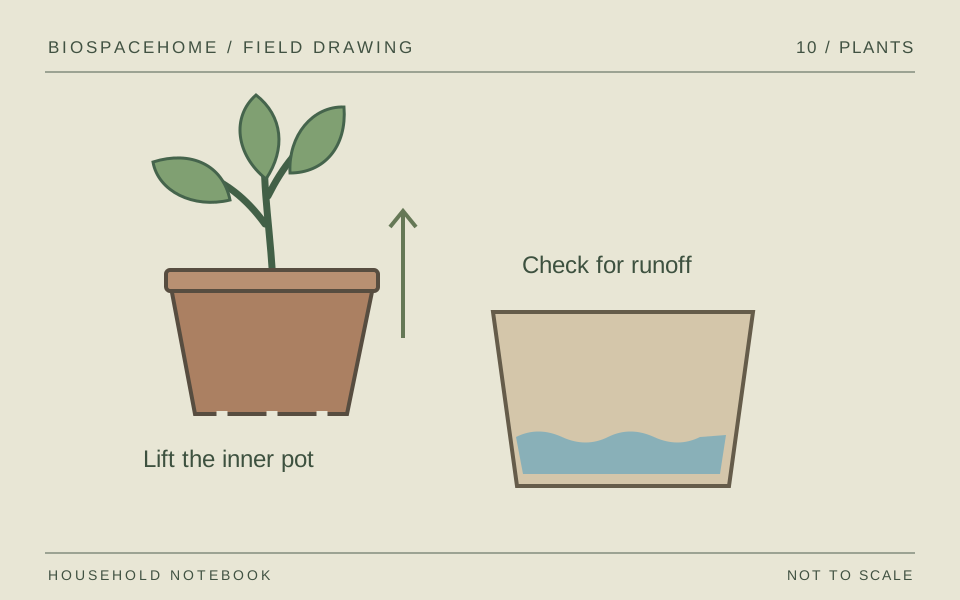
I would begin a watering check at the container, before reaching for a jug. Many houseplants arrive in a plastic nursery pot that is slipped inside a decorative pot without holes. The inner pot holds the growing mix; the outer one hides it and catches drips. That arrangement is convenient, but it can also hide water left from the previous watering. Looking only at the leaves or the surface of the mix misses part of the picture.
The useful question is not simply whether the plant received water recently. It is whether this particular plant needs more now, and whether excess water has somewhere to go. Species, growing mix, light and the container arrangement all affect that decision. University of Minnesota Extension advises matching care to plant requirements and avoiding poor drainage and standing water. A calendar cannot make those checks on your behalf.
This guide is for an ordinary draining pot inside a removable cover pot. Self-watering planters use a different design and need their own instructions. Heavy or fixed containers also need a check that can be done without unsafe lifting. For a manageable pot, a quick look beneath it can be a useful part of a wider inspection, rather than a new rule that every plant must be watered or lifted on the same day.
Look for the actual drainage arrangement. Does the inner pot have open drainage holes? Can it be removed from the decorative cover? Is there a saucer underneath, or another container hidden between the two? I would answer these questions once when arranging the plant, so the next check does not involve discovering a complicated stack of pots while holding something wet above a wooden table.
For a small pot you can handle comfortably, lift it onto a suitable waterproof surface and look inside the outer container. Empty pooled runoff rather than leaving the inner pot standing in it. A decorative sleeve is not automatically a self-watering system. If the plant is too heavy or awkward to remove, do not force it; arrange suitable help or a setup that permits safe inspection and drainage.
Put the empty containers back together before adding water and check how easily they separate. A tight fit can turn a simple task into a wrestling match. It may be worth choosing a more accessible cover pot, but you do not need a new container collection. The practical aim is to see and manage runoff without damaging the plant, dropping the pot or wetting the furniture.
A recurring reminder can be useful if its wording is “check the plants.” It becomes less useful when it says “give every pot a drink.” Imagine two plants checked on a Saturday: one still has damp growing mix, while the other has reached the point at which its species guide recommends watering. Doing different things is a sensible result of the inspection, not evidence that the routine has failed.
For a manageable container, weight can provide another clue. Compare the same pot with its own previous condition, including how it felt after watering and drainage. Do not compare a thick ceramic container with a thin plastic one and infer which plant is thirsty. The containers themselves weigh differently, and a heavier pot does not tell you exactly how moisture is distributed through the mix.
I would combine that clue with the plant’s identity, the appropriate way of checking its growing mix, and the drainage arrangement. No single shortcut needs to carry the whole decision. If the mix remains damp when a reminder appears, record that observation and follow the species guidance. There is no need to add a token splash just to mark a calendar task complete.
University of Minnesota Extension explains that available light matters both to plant growth and watering needs. A plant growing slowly in less light may use less water; a bright, warm position can dry more quickly. These are reasons to observe, not a formula that calculates a watering interval from the distance to a window. Plants and their containers still need individual attention.
Consider a hypothetical pair of pots on a broad shelf. One receives useful window light while the other is shaded by the side of a bookcase. Even if they were watered together, their next checks may produce different results. Before deciding that one plant is difficult, note the difference in exposure and identify whether each plant suits its position. Moving both into stronger sun is not an automatic solution.
The room can also change without the plant moving. A blind may stay closed during a working week, or seasonal light may stop reaching the shelf. Add that observation to your notes when drying seems different. I would avoid changing the container, location, fertilizer and watering routine all at once; it becomes difficult to tell what the original problem was or which adjustment helped.
A dry-looking top layer is not a complete view of the growing mix. Equally, one damp spot does not describe every part of a root ball. A moisture meter, if used, should be interpreted according to its instructions alongside other observations. I would not treat a single reading as a diagnosis, particularly when it conflicts with what you can see in the cover pot.
A plant that droops or loses leaves may have more than one possible problem. Adding water simply because it looks unhappy can make an already wet container wetter. Extension guidance connects excess watering and poor drainage with problems including root rot and fungus gnats, but a symptom alone cannot confirm either diagnosis. Check for pooled water and read guidance for the identified plant before choosing an intervention.
If the decline continues, prepare a useful request for help: the plant name if known, photographs of the whole plant and affected parts, the container arrangement, and notes on recent watering and light. A local extension service or knowledgeable plant adviser can work with that information. “I watered every Sunday” is less informative than describing what the mix and drainage looked like when you checked.
When the plant does need water, follow guidance for that species and growing setup. For a removable nursery pot, a suitable sink or basin may make it easier to manage runoff. Plan the move before watering, especially if the container will become heavier. Keep the work area clear and avoid carrying a dripping pot across a route where spilled water could cause a slip.
Let excess water drain and empty any water collected in the outer container or saucer. Check again after returning the inner pot if more runoff appears. The point is to finish the job, rather than carefully measuring a drink and then leaving its excess hidden below. If drainage seems blocked or water behaves unexpectedly, investigate the container arrangement before repeating the same watering routine.
In a shared household, make the end of the task clear. A simple note such as “checked Tuesday; still damp” or “watered Wednesday; runoff emptied” helps someone else understand what happened. It is more useful than a tick meaning only that somebody looked at the plant. Agree who will act next so two well-intentioned people do not independently water the same pot.
A plant log does not need daily measurements or a photograph from every angle. Choose a question: does this pot remain damp longer after the blind is kept closed, or is runoff being left inside the cover? Write down the date, what you found and what you did. That keeps the record tied to a decision instead of turning ordinary plant care into a second job.
For example, a hypothetical note could read: “Monday: cover empty, mix still damp, no water added. Thursday: checked against species guidance, watered, drained before returning.” Another person can understand that record without guessing what “done” means. The example is not a proposed Monday-and-Thursday schedule; the timing of checks should suit the actual plant and changing conditions.
Review the arrangement if the same obstacle keeps appearing. A pot that is difficult to reach or a sleeve that traps unseen runoff may need a more accessible position or container. Correcting that practical inconvenience can make consistent care easier. Keep checking the plant itself as well: a neat log and a dry saucer are useful observations, not proof that every aspect of its care is right.
It can serve as a cover for a draining inner pot if you can check and empty runoff. The arrangement should not leave the inner pot standing in pooled water. If access is difficult, reconsider the setup before making it part of the routine.
Follow that system’s instructions and the plant’s requirements. Its designed reservoir is different from water accidentally left in an ordinary cover pot. Do not apply a rule from one arrangement to the other just because both have an outer container.
No. Do not attempt a lift you cannot manage safely. Arrange suitable help or a container setup that allows drainage and inspection without risky handling. Pot weight is one possible clue, not a requirement for caring for every houseplant.
A yellow leaf alone does not identify the cause. Check the identified species, light, growing mix, drainage and any other symptoms. Photograph a continuing problem and seek appropriate advice rather than changing several care decisions at once.
Emptying runoff addresses one part of the arrangement. It does not establish that the plant has suitable light, growing mix or watering. Continue to check the plant’s needs and condition; a tidy container is not a full health assessment.
I would aim for a watering routine with a clear beginning and end: inspect the plant and container, make a species-appropriate decision, then manage any runoff. The useful habit is paying attention to what is there today. A reminder, a pot-weight comparison and a short note can support that habit without becoming rigid rules of their own.
Have a correction? Contact the editors.
Use the plant’s condition and growing space to decide whether repotting is useful, rather than choosing a container first.
Make room for observation before placing a new plant beside the rest of the collection.
Match the care plan to the plants, the absence and the person helping, rather than giving every pot the same drink.