Indoor growing
Does This Houseplant Need a Larger Pot?
Use the plant’s condition and growing space to decide whether repotting is useful, rather than choosing a container first.
Match the care plan to the plants, the absence and the person helping, rather than giving every pot the same drink.
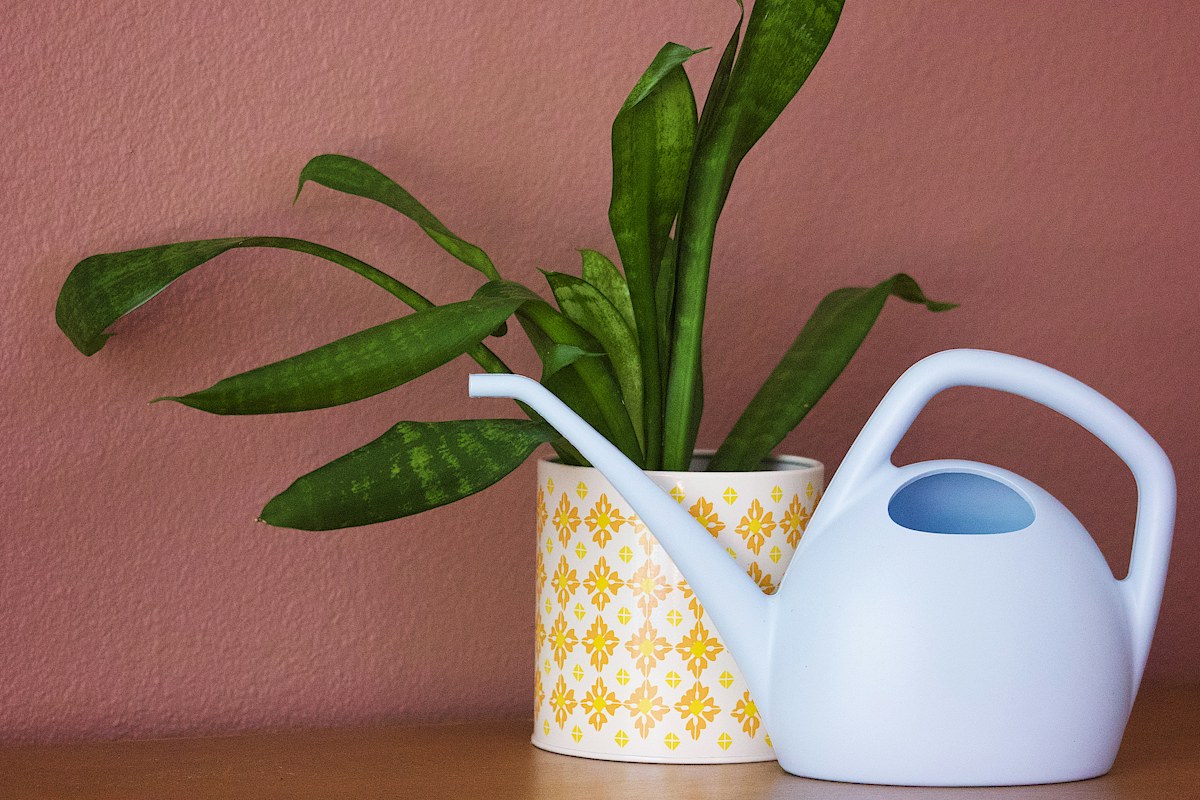
Water the plants is a surprisingly incomplete instruction. It does not tell a helper which pots need checking, how to recognize them or what to do when a plant looks different from the photograph. I would prepare the handoff while still at home, leaving enough time to discover whether the instructions make sense to somebody else.
This guide uses an imaginary household with a moisture-loving foliage plant and a succulent before a trip. The contrast is deliberate: one rule for every pot can be worse than a short set of individual notes. The plan should fit the length of the absence and the conditions that will remain in the home, without promising that any method guarantees survival.
Start with the period between your last normal care check and the next one someone can realistically make. Travel delays or a helper’s availability may affect that interval. Do not substitute the number of nights booked for a practical care plan. Think about the conditions expected while the household is away, including the season and the room’s normal temperature range.
The Royal Horticultural Society’s holiday-care guidance distinguishes shorter and longer absences and notes that plant needs vary. Its examples are useful possibilities, not guarantees for every collection. A succulent and a moisture-loving plant should not receive identical treatment simply because they share a shelf. Use guidance for the identified plants and what you have observed under their ordinary conditions.
Make a short list of which plants need help, which may need only a check and which have an unresolved care problem. If a plant is already declining, seek appropriate advice before handing the uncertainty to a neighbor. Do not disguise the issue by writing extra water on its label. A helper needs a clear task, not responsibility for guessing the cause of an existing problem.
Give the relevant pots simple identifiers and take a clear photograph of the arrangement. A note saying the fern by the window may be ambiguous if someone has moved the plant or there are several similar pots. Numbering a small set makes a conversation easier: the helper can ask about plant three instead of describing a green plant from memory.
Pair each identifier with care guidance suited to that plant and its actual setup. Avoid a universal fixed cup of water merely because the quantity is easy to write. The growing medium, container, plant and conditions affect need. Show the helper the check you ordinarily use under appropriate guidance, and explain what would make them pause and ask rather than act.
Keep the notes readable at the point of use. A long message buried in a travel conversation can be harder to find than a short page near the plants. Include a contact method and the minimum useful background, not every care fact you know. If the person has different physical abilities or experience, adapt the arrangement rather than assuming that ordinary tasks will be equally manageable.
Invite the helper to walk through the instructions with you if possible. Let them identify the pots, locate the necessary equipment and explain the next step in their own words. This is a useful way to discover an ambiguous label or an inaccessible container. It is easier to correct the plan now than to explain the whole shelf from another time zone.
Check practical access separately from plant care. Agree how the person enters, which areas are relevant and what to do if access fails. Use arrangements you trust and keep private security information within the appropriate private channel. Do not alter fire safety, disable essential systems or leave insecure access purely to make watering convenient.
Make it clear that the helper can stop when something is unexpected. A leaking container, an unusually cold room or a plant that has fallen over calls for a question, not necessarily a bigger watering. A photograph and a brief description can be enough to decide the next step. Do not expect the helper to diagnose pests, repair equipment or lift an unmanageable plant.
RHS describes wick and capillary arrangements as options for suitable situations, but their usefulness depends on the plants, containers and setup. A method that works for one pot is not automatically suitable for all of them. If you intend to use one, follow the relevant guidance and test it while someone can observe the result and correct a problem.
Do not repot the entire collection into new self-watering containers just before a short trip. RHS treats reservoir containers as a longer-term growing choice for appropriate plants, rather than a universal last-minute holiday solution. An untested change introduces uncertainty about both water supply and plant response at the moment you are about to stop observing it.
Keep water containers stable and suitable for the household, including children and pets. Do not leave all pots standing in a filled bath or improvise a sealed cover in strong sun. These are not harmless substitutes for understanding the method. If the arrangement cannot be tested or made appropriate, a suitable human check or a different care plan may be the more manageable option.
When more than one person helps, a short shared record can prevent duplicate work. Plant three checked, no action needed is as useful as a note that it was watered. The record should reflect the agreed care instructions and actual observation, not encourage each visitor to do something simply to show that the visit occurred.
For the imaginary succulent and foliage plant, the helper may find that only one needs attention at a given visit. That is a legitimate outcome if it matches the relevant guidance and conditions. Avoid creating a checklist that requires a watering tick beside every plant. A care visit is an opportunity to assess the needs, not a quota of water to distribute.
Include a fallback for a missed visit. Another trusted person may be available, or the original helper may need to ask you how to adjust the plan. Keep the arrangement realistic and agreed in advance. Do not assume that a neighbor’s availability is unlimited or that a device removes the need to consider an interruption in access or supply.
Read the notes and look at the actual conditions before watering. A plant may have been cared for recently, and the usual homecoming impulse to give everything a generous drink can duplicate that work. Ask about anything unclear in the record. Thank the helper for observations as well as actions; useful information makes the return easier to manage.
If something looks different, record the change and seek the relevant care guidance. Do not immediately combine extra water, fertilizer, pruning and repotting in an attempt to compensate for the absence. Several simultaneous changes make it harder to understand the response. A measured next step is more useful than treating travel as proof that every plant needs rescuing.
Keep the instructions that worked and revise the confusing parts while the visit is fresh in everyone’s memory. Perhaps a pot needs a clearer label, or the equipment was stored too far away. Those small improvements make the next absence easier. A successful plan is one that a real person can follow in the actual room, not the most elaborate system described online.
Assess each plant using appropriate guidance and its current conditions. Do not give every pot an automatic extra drink because travel is approaching. Plants differ, and a plant whose medium is already sufficiently moist may not need the same action as a different one.
It can be easy to write but may not suit the plant’s changing needs. Explain the relevant check and method for the identified plant and container. Rehearse the instructions with the helper so they know when to act and when to ask.
Not universally. RHS describes reservoir containers as a longer-term option for suitable plants, rather than a reason to repot at the last minute. Any system needs appropriate setup and a trial while you can observe how it behaves.
Use one short record associated with the identified pots. Record checks as well as watering, so the next person knows that no action may have been needed. This helps prevent a second visit repeating work simply because the first person did not leave a note.
Read the visit notes and inspect the current conditions before resuming care. Do not automatically water everything. Clarify unfamiliar observations with the helper and use plant-specific advice for any concern rather than making several corrective changes at once.
I would leave the smallest plan that makes the care clear: identified pots, suitable instructions, a rehearsal and a way to ask for help. Add a tested system only where it fits the plants and the home. On return, use the record before acting. The best handoff respects both the collection’s differences and the person giving their time to look after it.
Have a correction? Contact the editors.
Use the plant’s condition and growing space to decide whether repotting is useful, rather than choosing a container first.
Make room for observation before placing a new plant beside the rest of the collection.
A dry-looking surface can hide leftover water below the nursery pot. Check the container, the plant and its light before deciding what comes next.