Indoor growing
Give a New Houseplant a Careful Welcome
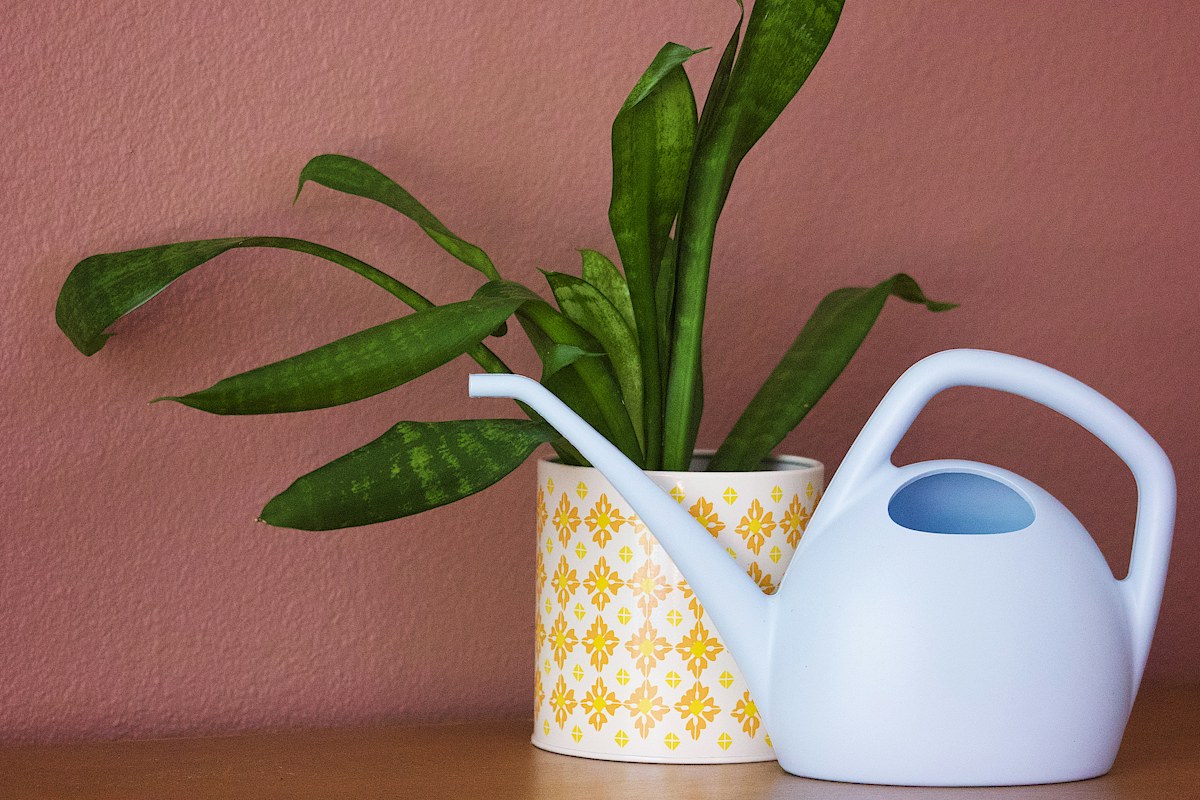
Make room for observation before placing a new plant beside the rest of the collection.
Use the plant’s condition and growing space to decide whether repotting is useful, rather than choosing a container first.
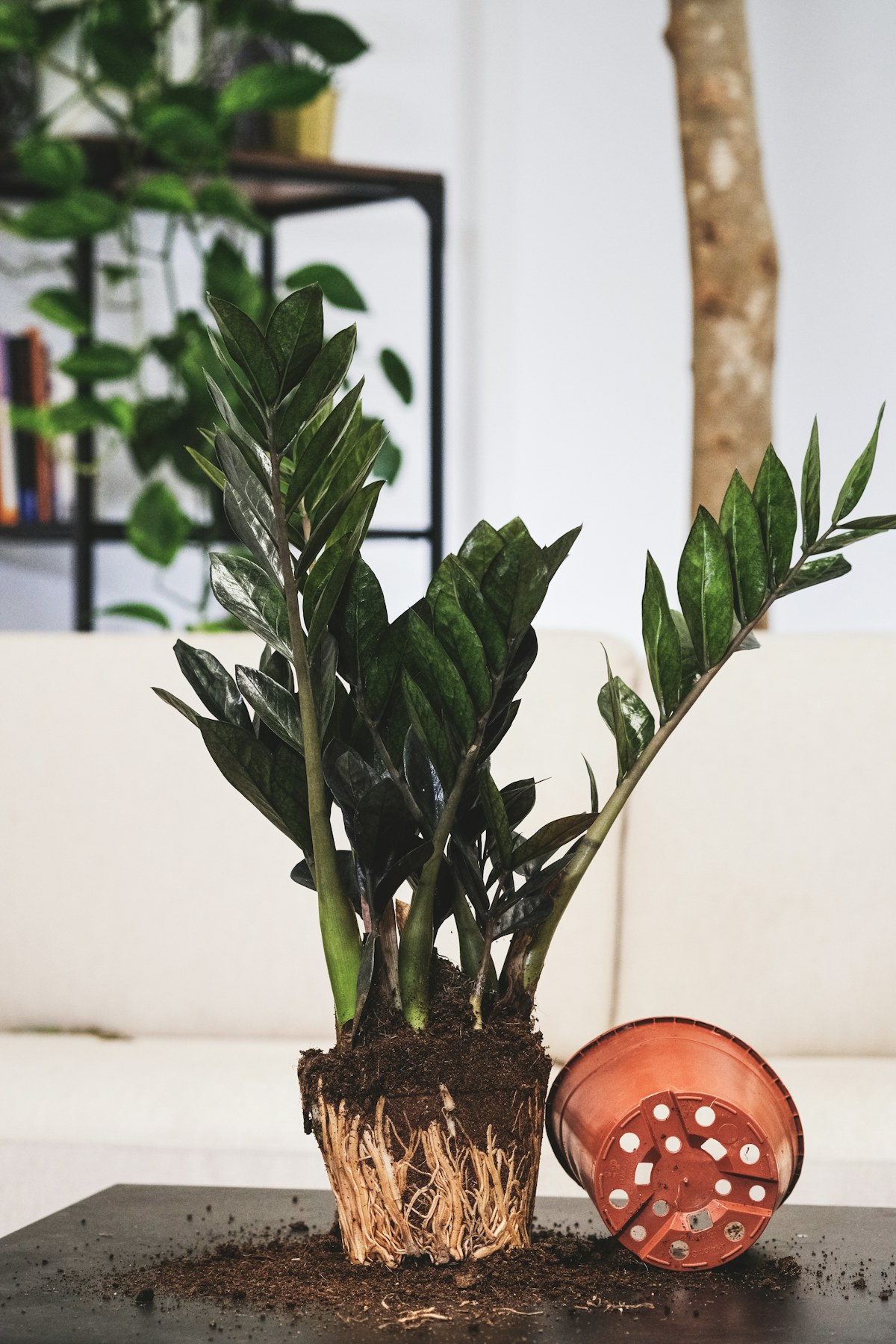
A larger decorative pot can make repotting feel like an obvious next step. The plant may tell a less straightforward story. Slow growth, frequent drying or a top-heavy shape can raise questions about the container, but none explains the whole situation alone. I prefer to identify the problem before buying the pot intended to solve it.
This guide compares two imaginary plants: one with a crowded root ball and one growing slowly in an unsuitable position. The decision is about whether more root space would help. It is not a universal calendar for repotting, a diagnosis from one visible sign or a promise that disturbing the roots will improve an unhappy plant.
Write down the observation that prompted the question. The plant needs watering more often than before is more useful than the plant wants a new home. Record what else changed: its position, the season, room conditions or the way it is watered. This gives a possible container problem some context without requiring a detailed diary for every leaf.
Iowa State University Extension lists several reasons to consider repotting, including crowding, rapid drying and a deteriorating growing medium. Those are starting points for investigation. A plant can dry more quickly after a move into stronger light, while slow growth can have several causes. The guide’s observations should not become a shortcut that assigns every problem to a small pot.
For the first imaginary plant, suppose the watering routine has become difficult despite otherwise similar conditions and roots appear crowded. For the second, suppose growth slowed after it moved to a dim corner. The two plants need different questions. A larger container does not supply missing light, and buying one for both would skip the most useful part of the assessment.
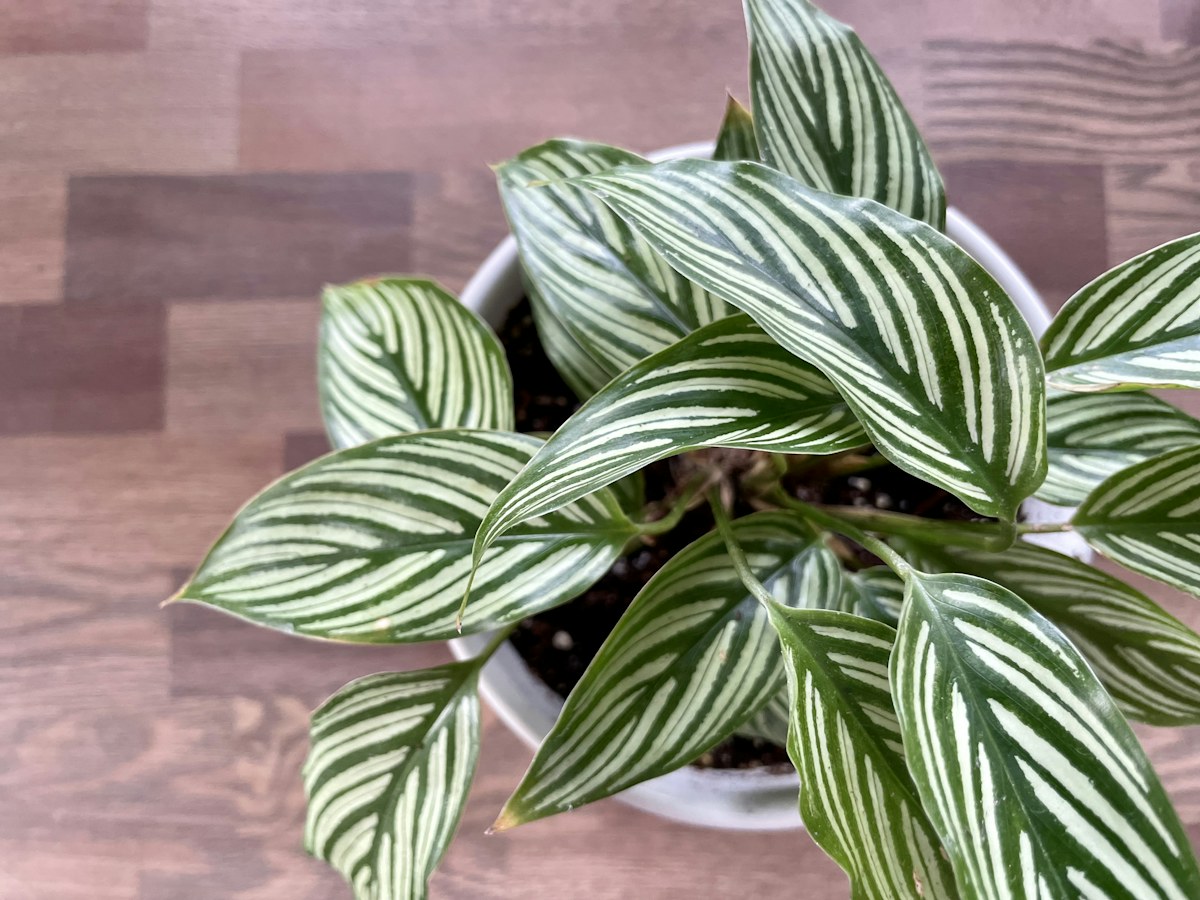
Identify the plant as accurately as you can and consult suitable care guidance. Different plants use different growing media and conditions; an orchid and a common foliage plant may not belong in the same mix. If the identity remains uncertain, seek help before choosing a repotting method based on whichever plant photograph looks closest.
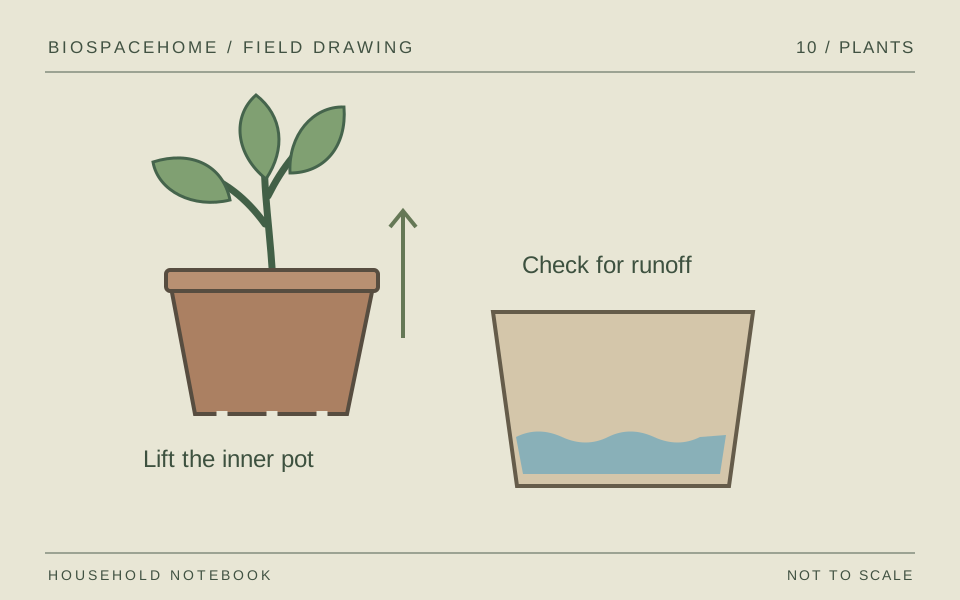
Look at how the growing pot and any decorative cover fit together. Can excess water leave the growing container, and can you inspect the arrangement without damaging it? Note the usable dimensions rather than only the decorative pot’s outside width. A deep cover can hide a much smaller growing pot, while a tight fit may make routine care awkward.
Consider stability and weight. A taller plant may need a suitable stable arrangement, but adding a much larger volume of growing medium is not the only possible response. Do not balance a heavy plant on a narrow surface while assessing it. If moving it requires more help than you have, make that a reason to plan assistance instead of improvising a risky lift.
If a root-ball inspection is appropriate for the identified plant and you can manage it safely, prepare the space before beginning. Have a surface that can tolerate the work and a clear place to set the container. Avoid pulling on stems or forcing a plant from a pot because an article suggested looking at the roots. Use plant-specific handling guidance.
A few visible roots are not automatically a verdict. Some plants naturally show roots in ways that differ from the familiar foliage-plant example. Look for a pattern consistent with the care guidance and the observed problem, and avoid deciding root health from a universal color rule. Photographs and an accurate plant description can help an extension service or knowledgeable grower advise you.
If the plant is stuck, extremely heavy, fragile or unfamiliar, stop before the inspection becomes a repair job of its own. Breaking a container or cutting roots introduces new decisions. A limited observation is still useful information. You can ask for help with what you know instead of damaging the plant in pursuit of certainty about the original question.
Iowa State advises a limited increase in container size rather than moving a crowded plant straight into an enormous pot. The practical choice still depends on the plant, the current root ball and the care method. Read the relevant guidance and compare actual internal dimensions. A named pot size is not always a reliable description of the growing space inside it.
Check drainage and the suitability of the growing medium together. A larger decorative container with no appropriate way to manage excess water does not solve the growing problem. Nor should a layer of material at the bottom be treated as a universal correction for an unsuitable pot. The plant’s growing container needs to function as a whole under the chosen care method.
If your existing container remains suitable and the question is about degraded medium or another issue, a larger size may not be the required change. Seek the appropriate method for that situation rather than repotting upward by habit. The useful outcome is a clear reason for the change you make, including the option of leaving the size alone.
Once you have a suitable plan, gather the relevant container, medium and tools before disturbing the plant. Follow the method appropriate to the species and condition. Keep children and pets away from spilled material and unfamiliar plants, and follow product handling instructions. Do not add improvised fertilizers or treatments simply because the roots are already accessible.
Avoid combining a routine repot with several unneeded changes. A new position, severe pruning and a different watering arrangement all at once can make the plant’s response harder to interpret. Where possible, retain the suitable conditions that were already working. If another change is necessary, note it so later observations are not attributed solely to the container.
Plan the next care check rather than prescribing an automatic extra drink. The medium and container may behave differently after the work, so the old watering interval is not a measurement of present need. Follow the plant’s guidance and observe the actual conditions. A larger pot is not permission to leave the growing medium continually saturated.
Return to the initial observation. Was the problem an unstable arrangement, crowded roots or a medium that no longer functioned well? Look for a relevant change over an appropriate period, rather than demanding new leaves immediately. The plant may not respond on the timetable of a shopping project. Keep expectations tied to its normal growth and the conditions available.
If decline continues, revisit the evidence and seek suitable advice. Do not keep increasing container size each time the plant looks unhappy. Explain what changed, when it changed and how care has been handled. This is more useful than presenting a sequence of unrecorded treatments after several attempts have altered the original situation.
For our second imaginary plant in the dim corner, the best result may have been a better placement decision with no repotting at all. For the crowded first plant, a modest suitable container may have been justified. These different outcomes are the point of the exercise. Choosing the right next step matters more than making every plant follow the same maintenance schedule.
No. Light, seasonal growth, plant type and other conditions can affect growth. Treat it as a clue to investigate alongside the container and roots. A larger pot does not supply light or resolve every care problem.
Use guidance appropriate to the identified plant and its current root ball. Iowa State recommends a modest increase rather than an enormous new container. Compare usable internal dimensions and drainage, and do not assume that the same increase suits every species or situation.
A calendar can remind you to assess a plant, but it does not establish that each one needs more space. Review its condition and growing arrangement. Some may need no change; others may need attention to the medium or another factor rather than a larger container.
Avoid a universal color rule. Roots and growing arrangements vary between plants, and one visible sign does not establish a diagnosis. Use species-appropriate guidance and seek advice with clear photographs and a care history when the condition is uncertain.
Stop and arrange appropriate help. Do not pull on stems, risk a heavy lift or break a container merely to finish an inspection. A description of the visible arrangement and the problem that prompted the check is still a useful basis for advice.
I would keep the decision attached to the plant, not the empty pot in the shop. Name the problem, check the growing conditions and inspect only what you can handle appropriately. If repotting is warranted, make a suitable modest change and observe the result. Leaving a plant in its present container can be a considered decision too.
Have a correction? Contact the editors.
Make room for observation before placing a new plant beside the rest of the collection.
Match the care plan to the plants, the absence and the person helping, rather than giving every pot the same drink.
A dry-looking surface can hide leftover water below the nursery pot. Check the container, the plant and its light before deciding what comes next.