Low-waste kitchen
Read the Date Label Before Deciding What to Keep
A practical way to separate the wording on a package from its storage history, with clear limits on what either can tell you.
Compare the route, acceptance rules and storage space before making food-scrap collection part of your kitchen.
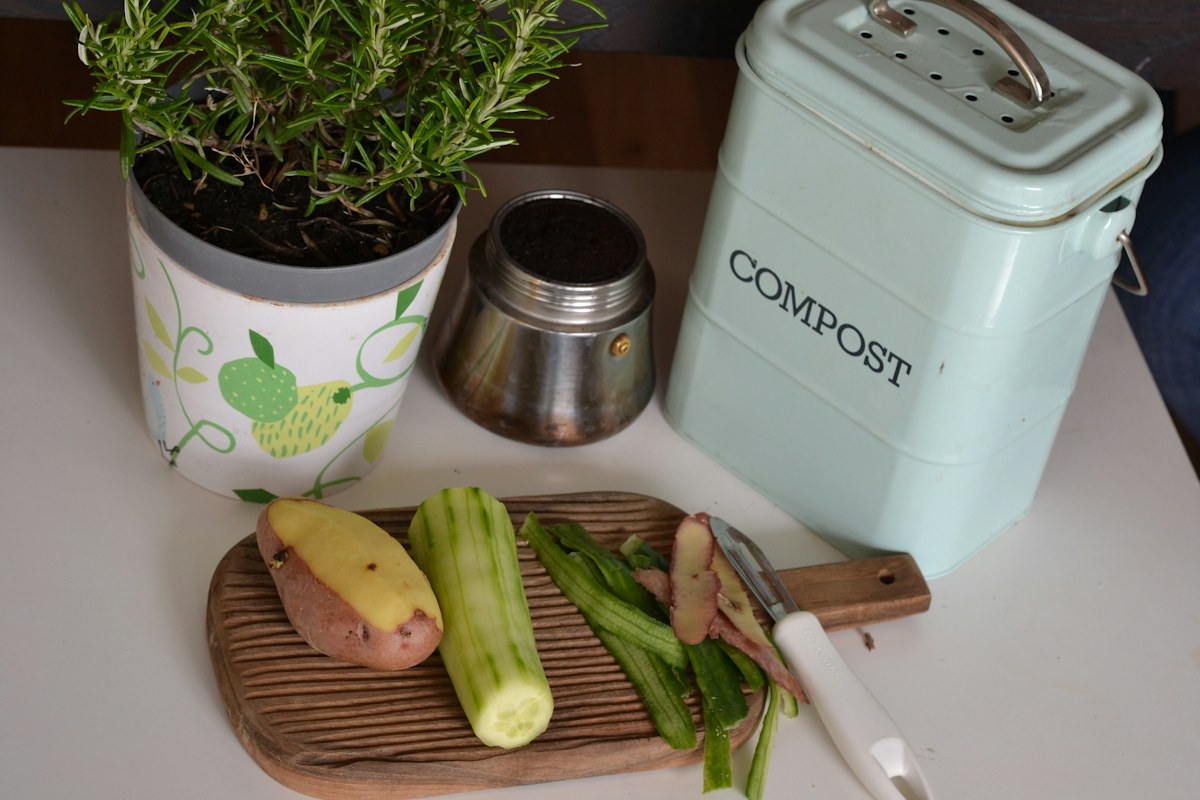
A kitchen caddy is only the first stop in a longer journey. Before choosing one, I would find out where its contents can actually go. A beautifully sealed container does little good if the collection point is closed when you pass it, or if the receiving program rejects the bags you bought to line it.
The useful question is practical: can this household keep the accepted material separate and deliver it regularly? That answer may lead to municipal collection, a community drop-off, home composting or a smaller trial while you look for a suitable service. None needs to begin with an expensive appliance. The imaginary apartment below gives us a way to compare those choices.
The US Environmental Protection Agency describes municipal and community programs as alternatives for people without space to compost at home. That is a useful starting point, rather than a promise that every neighborhood offers the same service. Look at your council, waste operator or community organization’s current information. Find a named place or collection arrangement, not simply a map pin labelled compost.
For each possibility, write down who can use it, when material is accepted, whether registration is needed and how questions are handled. A community garden may compost its own plant material without accepting kitchen scraps from visitors. A residential collection may serve particular addresses. Confirming these boundaries is part of finding the service, not an awkward exception to an otherwise finished plan.
Imagine an apartment household that already visits a Saturday market. A food-scrap drop-off there would fit the existing trip only if it operates on those Saturdays and accepts that household’s material. Compare it with a weekday collection requiring access to a shared courtyard. The nearer option is not automatically the easier one when the household cannot meet its access arrangements.
A useful list answers specific questions: are cooked leftovers accepted, what about meat or bones, and which liners are allowed? Do not transfer answers from a neighboring city. Backyard composting, community systems and commercial facilities may manage different materials. The receiving organization’s instructions determine what belongs in its stream, even when a product carries a broad environmental claim.
Packaging deserves its own question. A bag or cup marked compostable does not establish that your chosen service accepts it. Ask about the exact material if the rules are unclear, and keep it out while checking. Similarly, a paper liner permitted by one program might be unsuitable for another. Buying a large box of liners before checking makes a small uncertainty expensive.
Turn the confirmed rules into a short card beside the collection container. Use the items your household actually encounters, rather than reproducing a huge municipal poster. If tea bags or food-soiled paper are confusing, put the answer there. Date the note and keep the provider’s link so you can update it when a notice changes the rules.
Now decide where accepted scraps will wait. Consider the normal interval between collections, the amount produced and the space available. A container needs to be manageable when full, easy to clean and protected from accidental spills. Follow the program’s storage advice. A countertop position may be convenient for preparation but unsuitable for keeping material for a long interval.
For our imaginary market household, a reusable container could move from preparation space to a designated storage place and then into a secure carrying bag on Saturday. If cold storage is part of the plan, first check that the program permits it and that there is genuinely suitable capacity. Do not crowd or compromise storage for food the household still intends to eat.
Try the arrangement with a small quantity before committing to larger containers. Observe whether the lid closes, whether everyone can distinguish the contents from food, and whether cleaning is manageable. A container that demands an elaborate cleanup every time may be a poor fit. Change its size or location rather than assuming that enthusiasm will make an awkward routine sustainable.
Think through carrying, emptying and returning the container. Can it travel upright? Will somebody need both hands while also managing shopping? Does the receiving point ask people to empty loose material, leave a permitted liner or swap a container? These are small details, but discovering them at the collection point can turn a useful trip into a spill or a rejected delivery.
The first visit can be an information visit if the rules remain uncertain. Ask the operator how to separate a questionable item, and bring that answer home. Do not leave material beside a closed gate or an overflowing bin. The fact that the destination normally handles scraps does not make unattended dumping an accepted backup arrangement.
Give the returning container a place and a cleaning routine consistent with its instructions. A washed container left somewhere obvious is easier to reuse than one buried with the shopping bags. If several people share the task, a simple done note can prevent someone carrying yesterday’s empty container back to the market while the full one remains at home.
The routine needs a second path for illness, travel, a canceled market or a missed collection. Ask the provider whether another authorized drop-off or later collection is available. Do not assume that material can wait indefinitely. Storage constraints may mean collecting a smaller amount that week or using the normal waste route under local instructions until service resumes.
This is also where home composting deserves a realistic comparison. It requires a suitable place, an appropriate method and continuing care; it is not merely leaving the kitchen caddy full. EPA’s home-composting guidance distinguishes backyard and worm systems. Anyone considering either should read the method-specific instructions and local rules before treating it as the automatic solution to missed collections.
An electric device that grinds and dries scraps is another separate decision. EPA explains that this processing does not create finished compost. Before buying one, check where its output would go and whether the intended recipient accepts it. A smaller volume is useful only when the household still has a suitable destination for the material and a reason to take on the appliance.
After several ordinary collection cycles, look at what made the process difficult. Were the rules unclear, did the container leak, or did the collection trip repeatedly conflict with work? Each problem calls for a different change. A smaller container will not solve inaccessible opening hours, while a better timetable will not stop someone adding prohibited packaging.
Keep one modest record: the collection happened, something was refused, or the storage arrangement needed changing. You do not need to weigh every peel unless that information helps a decision. If the routine repeatedly fails, reconsider the route. Choosing a service that fits the household is more useful than maintaining an impressive plan that rarely reaches its destination.
Finally, notice whether edible food is entering the container because it was forgotten. Collection handles what remains, but it does not replace shopping and meal planning. Set aside one separate question about food use, such as whether a smaller bag would have been enough. This keeps composting from becoming a reason to stop asking why perfectly usable ingredients were left uneaten.
No. Ask the organization operating the site. It may handle only material from its own activities, have capacity limits or accept a restricted range. A garden appearing on a map is not confirmation that residents may leave household scraps there.
No. Use the receiving program’s rules for that specific liner or packaging. If the answer is unclear, ask before including it. A certification or label does not mean that every composting facility accepts the item.
Not to begin choosing a collection route. First identify the destination and the practical storage problem. EPA distinguishes drying or grinding equipment from composting: the processed output still needs an appropriate destination. Check acceptance before considering an appliance.
Use the provider’s announced alternative where available and assess your storage limits. Do not leave scraps outside a closed site or assume they can wait indefinitely. A temporary smaller collection or the locally instructed waste route may be necessary.
Make a short, current list of the items that actually cause confusion in your kitchen. Pair it with the collection day, who is taking the material and where the empty container returns. Keep the provider’s link available for questions the note does not answer.
I would judge this arrangement by whether the scraps reach the right place with manageable effort. Start with a confirmed destination, make its rules visible in the kitchen and rehearse the ordinary trip. A realistic backup for a missed collection matters just as much as the bin itself. The equipment can follow once the route works.
Have a correction? Contact the editors.
A practical way to separate the wording on a package from its storage history, with clear limits on what either can tell you.
A short list of usable quantities, dinner roles and missing ingredients can help more than a beautifully arranged cupboard.
A loading check for awkward pans, crowded racks and the dishes that keep coming back for another wash.