Low-waste kitchen
A Pantry Inventory You Can Use at Dinner
A short list of usable quantities, dinner roles and missing ingredients can help more than a beautifully arranged cupboard.
A practical way to separate the wording on a package from its storage history, with clear limits on what either can tell you.
A food date looks like a simple deadline until two packages use different words. One says best before, another use by, and a third was opened several days ago. I would resist turning those three situations into one rule. The useful question is what the label means for that product in the place where it is sold, followed by how the food has actually been handled.
This is a reading exercise, not a method for declaring questionable food safe. Dates, storage instructions, opening instructions and the condition of a package answer different questions. A tidy refrigerator or a clear handwritten sticker cannot fill a gap in the handling history. An unpleasant surprise is also not the right time to invent a universal extra number of days.
Consider a hypothetical household preparing to shop. There is a sealed bag of salad, a tin from the pantry and an opened tub. Instead of sorting everything into keep and discard by the printed numbers alone, I would put each item through the following short conversation. The aim is a decision that can be explained, including when the available information is insufficient.
Begin with the complete phrase, rather than the most visible date. Also look for a second instruction elsewhere on the packaging. A lid may carry the date while a side panel explains refrigeration or what to do after opening. Reading only the lid can miss the condition that matters to your situation.
GOV.UK distinguishes use-by dates, which concern safety, from best-before dates, which concern quality. Its guidance also explains that storage conditions matter. That distinction belongs to its UK context. USDA guidance about dates on US shelf-stable products describes a different regulatory setting, with exceptions such as infant formula. Neither source justifies applying one country's shorthand to every package in a global kitchen.
I would establish which market's label is being used before discussing exceptions. The manufacturer's country of origin alone does not answer that: an imported product may carry labeling intended for the country where it is sold. If a translation or over-sticker is unclear, ask the retailer or manufacturer, using a photograph of the relevant wording without unnecessary personal information.
Imagine the salad was sold in the UK and carries a use-by date. Do not extend that date because the leaves still look attractive or because another website says dates usually concern quality. Read the storage directions and consider whether those conditions were met. The absence of a bad smell does not settle the question of food safety.
Now consider a shelf-stable tin sold in the United States. The USDA discussion of quality dates can help explain the wording, but the tin's condition, product instructions and storage still matter. This is not permission to use a leaking or otherwise suspect container. It also does not turn every canned product into the same storage case.
The contrast is useful because it exposes a common reasoning mistake: carrying an answer from one object to another. The household does not need to memorize every food category. It needs to recognize when the product, country or handling conditions have changed enough that the previous answer no longer applies.
For the opened tub, find the instruction about use after opening, if one is provided. A printed date for an unopened package does not necessarily describe the same situation after the seal is broken. Record the opening date when it would otherwise be forgotten, while keeping the original instructions available.
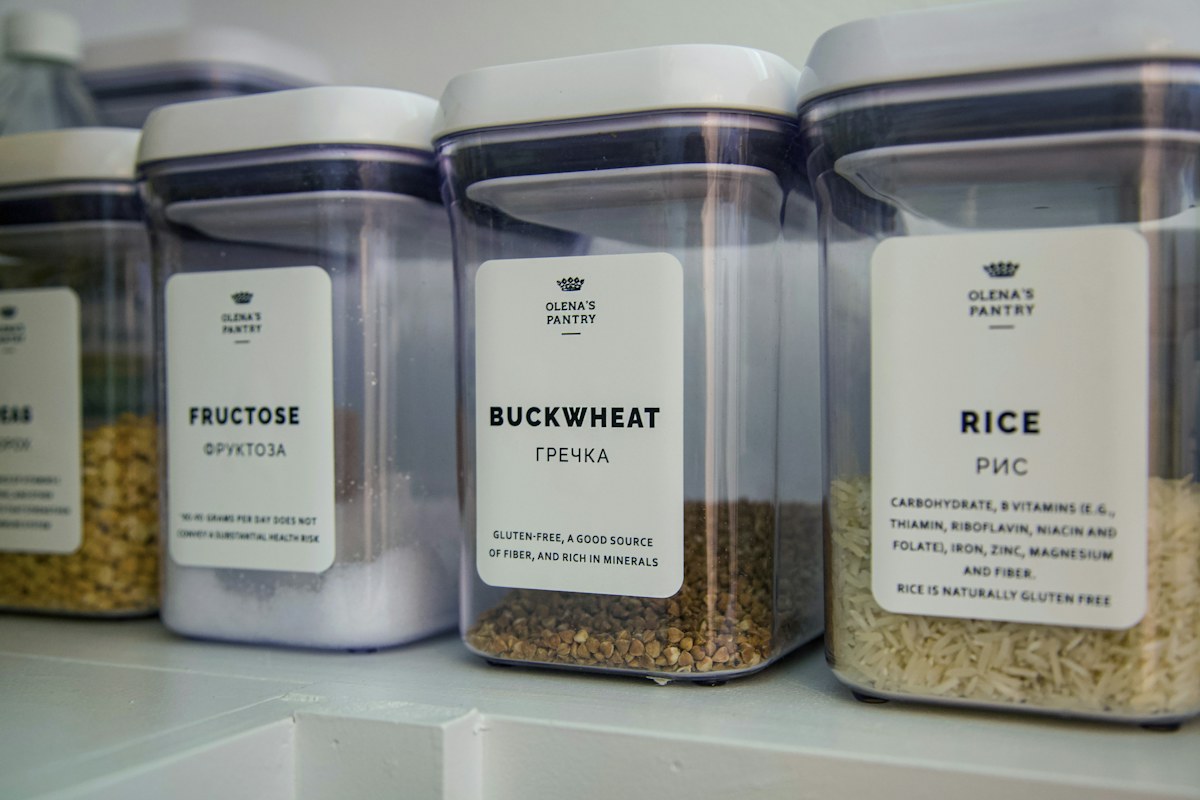
A useful note might say opened Tuesday; follow the side-panel instruction. It should not say safe until Friday unless the actual instructions and handling support that conclusion. If the package was decanted into another container, retain enough of its label to identify the food, allergens, date wording and storage directions. Pretty matching jars are a poor substitute for information.
In a shared kitchen, agree on what the note records. Someone may assume a handwritten number is a cooking date while another thinks it is an expiry date. Writing the event in words removes that ambiguity. If the opening time is unknown, label it as unknown rather than assigning a convenient date to complete the system.
Ask what can actually be established about the item. Was it stored according to the label? Does anyone know when it was opened? Was there an interruption that could matter, such as leaving chilled food out? These questions may lead to official food-specific guidance, rather than a decision made from appearance alone.
I would avoid negotiating with uncertainty by adding a positive observation: it looks normal, the kitchen was cool, or the date is still in the future. Those observations do not reconstruct an unknown history. The right outcome of this exercise can be to stop and seek guidance, or discard food whose safe handling cannot be established.
Keep the conversation practical rather than accusatory. Asking who left it there can turn a small information gap into an argument. Asking when it went into storage is more useful. Where nobody knows, record the gap and change the routine for the next item. Blame cannot restore missing information.
For a product that can be kept under its applicable guidance, write an action as well as a description. Put the unopened item where its label stays visible. Assign an appropriately stored opened ingredient to a specific planned meal. If freezing is suitable, follow the product's freezing directions and relevant food-safety guidance; freezing does not repair earlier unsafe handling.
My suggested record has three parts: what the label says, what is known about handling, and what to do next. It might identify the item as unopened with readable storage instructions, followed by a decision to use it in tomorrow's planned meal. It should not become a homemade certification system that replaces the label.
Use the record only where it solves a real problem. There is little value in copying every package date into an app if nobody checks the app at dinner. A short note attached to the original container is often easier to maintain. When information conflicts, return to the product instructions and an appropriate official source.
Food that repeatedly reaches a difficult decision is information about purchasing and meal plans. Suppose the household often opens a large tub for one recipe and then cannot confidently account for the remainder. A smaller pack or another meal planned before opening may be more useful than a more elaborate labeling system.
Review one repeated item at a time. Was too much bought, was the opening date lost, or did the meal change? Those are different problems. Reducing quantity addresses the first; preserving the label addresses the second; adjusting the plan addresses the third. None requires pretending that a safety instruction is flexible.
The result I would look for is fewer uncertain decisions next week. It is not a score based on how many questionable items were rescued. Waste prevention works best before food becomes difficult to assess, through realistic purchases, clear information and suitable storage. A decision to discard an unsafe or uncertain item is not a failure of that larger goal.
Do not use smell to override a UK use-by date or to establish that uncertain handling was safe. Read the applicable official guidance and the product instructions. Some quality judgments involve sensory observations, but that is different from proving that a food is safe to eat.
Do not assume a phrase has identical legal significance in every market. Check guidance for where the product is sold and the category involved. Imported packages and translated labels deserve particular care when the wording or intended market is unclear.
A quality date and a safety date answer different questions. Check the appropriate guidance, the food category, package condition and storage history. This article cannot make a product-specific safety decision from the printed date alone, in either direction.
Look for the retained label or a reliable record identifying the exact product and instructions. A similar product online may have different storage requirements. If essential information cannot be established, do not fill the gap with a guessed date or another household member’s memory.
No. Freezing does not reverse unsafe handling. Consider freezing only where it is appropriate for that food and the relevant timing and storage instructions can be followed. Record what was frozen and when without inventing a new safety guarantee.
Read the phrase, identify its context, and compare it with the food’s actual history. That sequence makes a clearer decision than treating every date as an interchangeable deadline. Keep the original instructions available, make uncertainty visible, and use recurring problems to improve the next purchase. The most useful label is one that helps the household act before the information is lost.
Have a correction? Contact the editors.
A short list of usable quantities, dinner roles and missing ingredients can help more than a beautifully arranged cupboard.
Compare the route, acceptance rules and storage space before making food-scrap collection part of your kitchen.
A loading check for awkward pans, crowded racks and the dishes that keep coming back for another wash.