Water & energy
Measure the Shower Before Choosing a Replacement
Separate flow, duration and compatibility so a water-saving decision starts with the shower you actually have.
Choose where the drying water will go as carefully as where the rack will stand, with a small observation routine for an ordinary home.
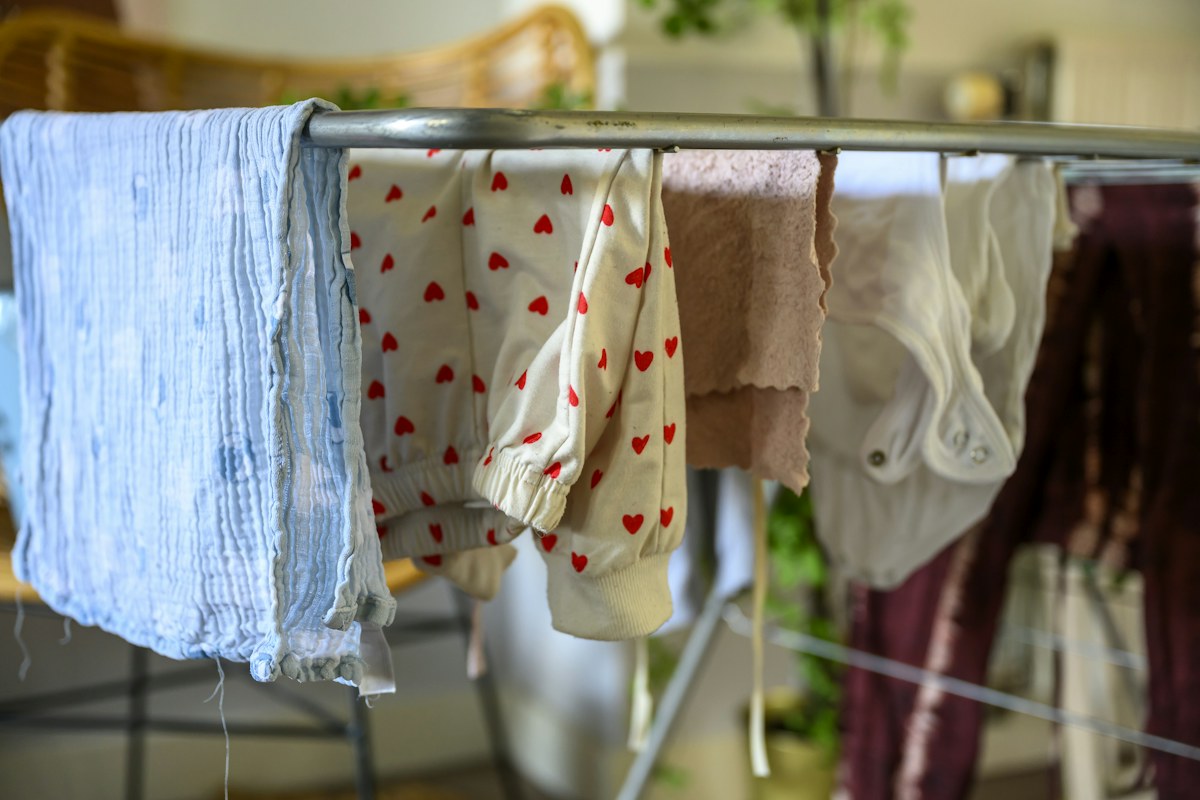
An indoor drying rack needs more than enough floor space. Water leaving the fabric enters the room's air, and the household still has to manage that moisture. I would choose the room and its ventilation arrangement before starting a load that has nowhere else to dry. A convenient empty corner is not necessarily a workable drying space.
This is a planning guide for normal laundry, not a diagnosis of damp or a mold-cleaning method. A wet patch may have several causes, including a leak or a building defect. Changing the drying schedule should not become a reason to postpone reporting a persistent problem, especially where surfaces remain damp or the issue is spreading.
Consider a hypothetical flat with one rack and a busy evening routine. The bedroom has space, the kitchen has cooking steam, and the hallway is an access route. There may be no perfect option. The useful task is to compare the actual constraints, choose a manageable load and recognize when another drying arrangement is needed.
Walk through the possible spaces and identify how ventilation is intended to work. An extractor that exhausts outdoors, a designed ventilation system and an opening window are different arrangements. Use the system according to its instructions, and do not assume that a small portable fan removes moisture simply because the air feels as though it is moving.
Clackmannanshire Council's household guidance identifies indoor laundry as a moisture source, recommends adequate ventilation and advises against drying clothes on radiators. The relevant application here is to make a deliberate plan for the room. It is not a universal instruction to open a window regardless of outdoor conditions, security, air quality or the building's design.
I would write down the practical limitation in plain words: this window cannot be left open when the household is away, or this room is already occupied by cooking. A plan that depends on an action nobody can safely maintain is not a plan for that home. Consider another time, a smaller load or a different drying facility.
Measure the rack when it is open, including the space that hanging clothes occupy. A narrow folded frame can become a broad obstacle once sleeves and towels are draped over it. Check whether doors, cupboards and the route through the room remain usable. Leave required clearances around heating and electrical equipment.
Do not cover a heater or place wet fabric against electrical items. Avoid creating a trailing-cable arrangement across the only route to a door. A rack that fits only by blocking ventilation, access or an escape route does not fit the room in the relevant sense. Choose a different position or method rather than accepting the obstruction as temporary.
Think about other people using the space. A person carrying a child or walking at night may need more clear room than the person placing the rack in daylight. The hypothetical flat's hallway might look spacious in a photograph but fail this everyday-use check. A useful layout supports the household throughout drying, not just at the moment it is set up.
Before washing, decide where the largest or slowest-drying pieces will hang. Leave enough room for fabric to spread rather than packing layers together. Follow the garments' care instructions and the washer's appropriate spin guidance; do not select a more aggressive setting simply to force every fabric through the same routine.
For the example flat, imagine a rack that accommodates ordinary clothing but becomes crowded when a large sheet is added. That observation can change the schedule. Wash the sheet when another suitable drying option is available, or avoid combining it with a load that fills every rail. The useful comparison is clothes ready for use, not the maximum quantity squeezed onto a rack.
Also decide what happens if drying takes longer than expected. Starting a second load because the calendar says laundry day may create two overlapping moisture sources and nowhere to put the wet items. A short fallback plan, such as postponing a nonessential load or using an appropriate laundry facility, prevents the schedule from becoming the room's only decision-maker.
Take a simple starting note about the room before laundry arrives, then look again while the load is drying and after it is removed. Note visible condensation, surfaces that remain wet and how long the fabric actually needs. Observations at the same place and similar times are easier to compare than impressions gathered at random.
A humidity meter can add context, but its location and the room conditions affect the reading. EPA guidance recommends keeping indoor relative humidity below 60 percent and, where possible, around 30 to 50 percent. Those figures are guidance, not a guarantee that every surface is dry or a diagnosis of what caused a particular patch.
I would use a few readings to ask better questions, not keep moving the meter until it shows a preferred number. A reading beside wet clothes may describe that immediate area differently from one across the room. Record where the device was placed and what else was happening, such as a shower or cooking, before attributing the change entirely to laundry.
Suppose condensation becomes noticeable on drying evenings and improves when the load and ventilation arrangement change. That pattern is useful to report. It does not prove that laundry is the only cause or that the building has no other problem. Weather, occupancy and other moisture sources may also have changed.
If a surface remains damp, a stain grows, a leak is suspected or mold appears, use the appropriate reporting and assessment route. A renter can describe the location, when it was first noticed, what changed and what has already been tried. Include the laundry observations as one part of the account rather than accepting responsibility for an unexamined defect.
Avoid using a room freshener or fresh paint as evidence that the underlying issue is resolved. This article does not prescribe mold-cleaning chemicals, a medical response or structural repairs. The purpose of the notes is to make the next conversation clearer and help the responsible person investigate the moisture source.
An electric dryer, a dehumidifier, an outdoor space and a laundry service solve different parts of the problem and bring different constraints. Before buying an appliance, check its intended use, ventilation or drainage needs, running arrangements and available space. Follow its manufacturer rather than assuming any device can be placed beside a rack and left unattended.
Compare the full task: carrying the load, supervision where required, time until it can be put away, and the effect on the room. A nominally convenient option may be difficult for a household that cannot safely move a full water container or leave a window open. Another option may be practical only for bulky items, while ordinary clothing uses the existing rack.
My preferred end point is a repeatable small routine: a load that fits, a safe place to dry it, a suitable moisture-management arrangement and a clear sign that the plan needs revisiting. Keep what works and change one relevant variable at a time where practical. There is no need to turn laundry into a daily experiment once the household has a workable arrangement.
A fan can move air, but movement alone does not establish that water vapor is leaving the room. Check the actual ventilation or moisture-removal arrangement and follow the equipment instructions. Do not treat the sensation of a breeze as proof that the moisture issue has been resolved.
That depends on safety, outdoor conditions, the building and the ventilation system. Do not adopt a routine that compromises security or creates another hazard. Use an appropriate arrangement for the home, and consider a different load schedule or drying method when window ventilation is unsuitable.
No. It is a measurement at a particular location and moment. A few comparable observations before, during and after drying can provide more context. Readings do not identify every cause of damp, and a number within a general target range does not certify that all surfaces are safe or dry.
Do not use a heater as an improvised drying surface unless its manufacturer specifically provides for that use. The council guidance cited here advises against radiator drying. Keep required clearances and vents open, and choose a rack or other method that is appropriate for the room.
Note the location, when you first noticed it, whether it changes, any suspected leak and the steps already tried. Safe photographs can help show its extent. Include drying and ventilation arrangements without assuming they explain the entire problem. Report a developing issue rather than waiting for a perfect record.
A drying plan should account for the room as well as the clothes. Choose a manageable load, preserve safe access, and identify how moisture is meant to leave or be removed. Then observe enough to know whether the arrangement works. If damp persists, use those observations to seek assessment instead of repeatedly reorganizing the same rack around an unresolved problem.
Have a correction? Contact the editors.
Separate flow, duration and compatibility so a water-saving decision starts with the shower you actually have.
Separate consumption, billing days and charges before deciding what a higher electricity payment means.
An observation sheet for a chilly entrance: locate the problem, establish who can change the door, and check that a proposed fix preserves its job.