Water & energy
Measure the Shower Before Choosing a Replacement
Separate flow, duration and compatibility so a water-saving decision starts with the shower you actually have.
Separate consumption, billing days and charges before deciding what a higher electricity payment means.
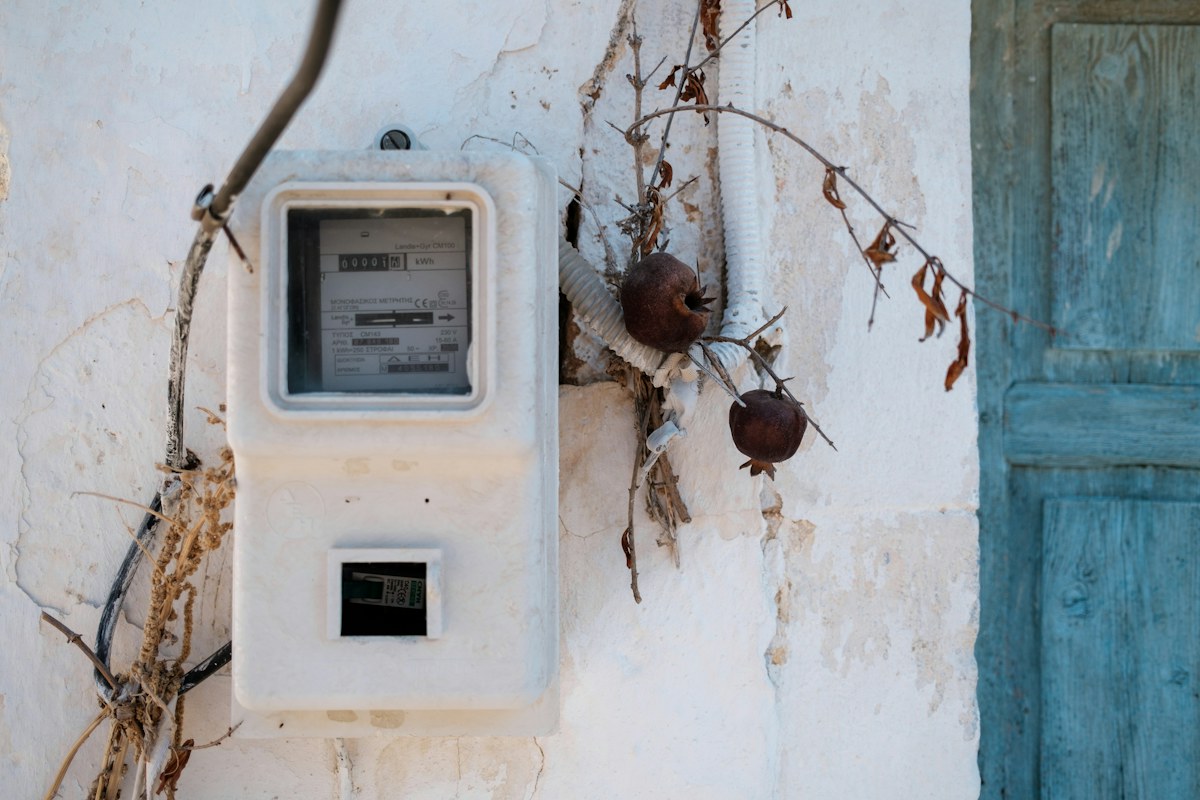
A higher electricity payment invites an immediate explanation: perhaps the dryer, a new appliance or someone working at home. I would leave those possibilities open until the bill itself has been read. The amount due can change for reasons that do not mean the household used energy more intensively.
This is a reading exercise using imaginary bills, rather than a tariff recommendation or an appliance diagnosis. We will compare the energy recorded, the days covered and the way the supplier turns usage into a charge. A short, well-labelled note can help you ask the supplier a useful question and avoid spending money on the wrong supposed solution.
Start with the dates the bill covers. The payment date, statement date and period of energy use may be different. Find the opening and closing readings where provided, and note whether they are described as actual, customer supplied or estimated. The exact labels vary, so use the supplier’s explanation if the statement is unclear.
A later actual reading can correct earlier estimates. In that situation, a large current charge may include usage that was not fully captured by earlier bills. That does not make the bill automatically wrong, but it changes the question. Instead of asking why this month’s appliances suddenly used so much, ask which period the adjusted usage belongs to.
Check the account and meter identification against the information you are authorized to access. Do not open panels, touch wiring or alter a meter. If the meter is inaccessible or shared, ask the supplier or property manager to clarify the arrangement. A photograph of an accessible display may help a query, but only when it can be obtained safely and legitimately.
The US Energy Information Administration distinguishes power from energy used over time. A watt or kilowatt describes a rate; a kilowatt-hour describes an amount of energy. On a bill, the energy quantity is the useful starting point for comparing consumption. A large wattage printed on an appliance is not, by itself, its contribution to the monthly total.
For example, an appliance’s operation may vary during its use, and some equipment cycles rather than drawing its highest rated power continuously. Multiplying a maximum nameplate figure by every hour of the month can therefore misrepresent actual use. A bill-reading exercise does not require making that estimate. Begin with what the supplier has recorded and what the record represents.
Use three separate headings on your note: energy, time and money. Put the billed kilowatt-hours under energy, the covered days under time and the charges under money. This small separation prevents an easy mistake: calling a higher currency total higher consumption when the only number checked was the amount payable at the bottom of the statement.
Consider two entirely imaginary periods. The first records three hundred kilowatt-hours over thirty days. The second records three hundred and ten over thirty-one days. The second has a higher total, but both average ten kilowatt-hours per day. Dividing by the period length gives a more useful description than treating every bill as an identical month.
Now imagine a third period recording three hundred and sixty kilowatt-hours over thirty days. Its daily average is twelve. That is a reason to investigate the circumstances, not proof that an appliance failed. Note whether occupancy, heating, cooling, cooking or other routines changed. Compare a similar season where possible, while recognizing that two periods are rarely identical.
An average also hides timing. A household on a time-dependent tariff may pay different rates for different portions of the same total. Solar generation, exports, batteries or shared-building arrangements add other distinctions. Ask the supplier which figures are suitable for your comparison. Do not force an unfamiliar statement into a simple calculation that ignores its important categories.
A bill can include more than energy multiplied by a single price. Ofgem’s explanations provide a Great Britain example of unit rates, standing charges and payment arrangements. Other regions and suppliers organize charges differently. Read your actual statement rather than importing the layout or terminology of an online example from somewhere else.
Look for fixed charges, taxes, adjustments, credits and previous balances, as applicable. A change in any of these may affect the amount due even if usage per day is unchanged. If a payment is part of a regular installment arrangement, it may also differ from the cost attributed to that particular period. Confirm how the supplier calculates it.
Keep copied rates clearly labelled with their applicable dates. A rate from an older bill or an example on a public information page may no longer apply. This guide deliberately avoids quoting a current tariff. The useful habit is to identify the rate on your own bill and ask about an unfamiliar change, not to memorize a number that belongs to another account.
A focused message might say: these are the two billing periods, these are the energy totals, and this reading changed from estimated to actual. Then ask which part explains the adjustment. Avoid sending unnecessary personal or payment details in a public forum. Use the supplier’s known contact channel and keep the account information needed for that conversation private.
If the quantity itself appears inconsistent, explain the discrepancy without deciding in advance what caused it. Perhaps the meter identifier needs checking, a reading was entered incorrectly or an estimate is being reconciled. Those are possibilities for the supplier to investigate, not conclusions established by a high total. Request a clear explanation of the figures used.
Record the response, any reference number and the next action agreed. If you still disagree, use the supplier’s formal complaint process and the relevant local consumer route. Rules differ by jurisdiction. This article does not provide deadlines, compensation promises or advice to stop paying a bill while a query is open; obtain guidance applicable to your situation.
Once the bill is understood, decide whether a household observation would help. A change in occupancy may explain much of the difference without requiring new equipment. A new routine might suggest a particular area to review. Keep the question narrow enough to answer, rather than beginning a general campaign to unplug every device regardless of its purpose.
Do not disconnect essential, safety-related or medically necessary equipment to pursue a lower number. Nor should a bill review become electrical work. If an appliance has a fault or presents a safety concern, follow the manufacturer’s instructions and seek appropriate qualified help. The energy statement is background information, not a diagnostic instrument for wiring or appliance safety.
When reviewing a later bill, retain the earlier notes about period length, readings, tariffs and household circumstances. A reduction after a change can be consistent with that change helping, but other factors may also have moved. Describe what you observed without claiming a precise saving that the comparison cannot establish. That restraint makes the record more useful the next time the bill raises a question.
It helps account for different billing-period lengths. A thirty-one-day period can have a higher total than a thirty-day period while showing the same daily average. The average is still descriptive: it does not explain seasonal conditions, changing occupants or which appliance used the energy.
No. Rates, fixed charges, adjustments, previous balances and payment arrangements may affect the amount due. Read the energy quantity and covered dates separately from the total charge, then ask the supplier to explain anything unfamiliar.
Yes. A later actual reading may reconcile earlier estimates, depending on the supplier’s billing process. Check how the statement labels each reading and ask which usage period an adjustment covers. Do not assume the entire adjustment reflects a sudden recent change.
Its rating alone does not establish how much energy it actually used during the billed period. Operating patterns and cycling can matter. Use manufacturer guidance or appropriate measurement advice if needed, without opening electrical equipment or treating a nameplate as a monthly usage record.
Keep the relevant statements, covered dates, energy quantities, reading types and a short description of the discrepancy. Contact the supplier through a known route and record the response. Share only the personal account information required for that private enquiry.
The first useful result may simply be a bill you can explain. Put the energy quantity beside the days covered, distinguish estimates from readings and separate the charges. If a question remains, you can ask it precisely. Only then decide whether a household change or further investigation is warranted, and keep the eventual claim no stronger than the evidence.
Have a correction? Contact the editors.
Separate flow, duration and compatibility so a water-saving decision starts with the shower you actually have.
An observation sheet for a chilly entrance: locate the problem, establish who can change the door, and check that a proposed fix preserves its job.
Choose where the drying water will go as carefully as where the rack will stand, with a small observation routine for an ordinary home.