Water & energy
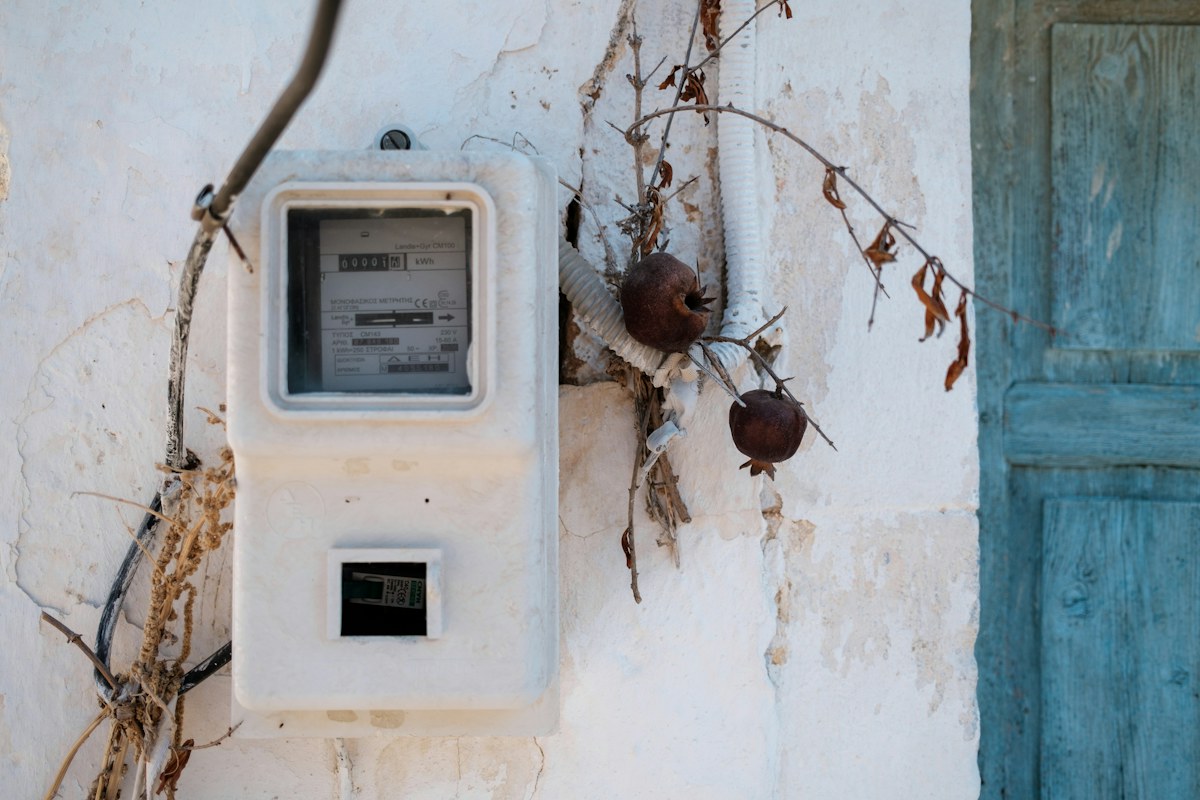
Read the Kilowatt-Hours Before Comparing Electricity Bills
Separate consumption, billing days and charges before deciding what a higher electricity payment means.
Separate flow, duration and compatibility so a water-saving decision starts with the shower you actually have.

A shower can feel forceful without using the amount of water you imagine, and an apparently gentle spray can run for a long time. I would separate those observations before ordering a replacement head. Flow is an amount per minute; duration tells us how many minutes that flow continues. Comfort is another question again.
The useful first step is a modest estimate, not dismantling the plumbing. This guide explains a small, optional collection measurement where it can be done safely, and alternatives where it cannot. The numbers are imaginary examples for understanding the arithmetic. They are not measurements of a particular home or a promise about the bill after a change.
Start with the physical arrangement. Can a manageable container rest securely where it collects the flow without anyone balancing, climbing or holding a heavy load? Can the controls be reached normally? If the answer is uncertain, leave the experiment out. A household estimate is not worth creating a slip, burn or lifting hazard in a wet space.
Avoid working with a hot spray or reaching toward electrical equipment. A timer can remain in a safe dry place and another person can help without entering the spray. Do not put a phone on the shower floor. If the fitting is overhead, fixed in an awkward position or part of an unfamiliar system, use its documentation or ask the appropriate provider for advice instead.
Model information may offer a rated flow, although the actual flow can depend on the installed system. Record that distinction. A documented figure is not your own measurement, but it may be enough to decide whether further investigation is worthwhile. There is no need to complete every possible check before asking a landlord, utility or qualified installer a focused question.
If collection is safe, use a suitable container with known markings and a short timed interval that cannot overfill it. Do not change a valve or remove a restrictor for the exercise. Record the amount collected and the time rather than remembering only the converted figure. Repeatability matters more than producing an impressive number of decimal places.
For a clearly hypothetical calculation, imagine collecting two liters in fifteen seconds. Four such intervals make one minute, so the estimated flow is eight liters per minute. This arithmetic assumes that the collected volume represents the spray and that the flow stayed reasonably steady. Water escaping the container or a poorly read marking makes the estimate less useful.
Write the units beside each number. Liters and gallons are not interchangeable, and gallon definitions can differ between countries. If you compare a product specification using another unit, use a reliable conversion and identify which gallon it means. Keeping the original reading lets you check a conversion later instead of treating a copied number as unquestionable evidence.
The second part is the length of time the water runs. Use an ordinary observation rather than rushing a shower purely to make the result look better. Separate running-water time from time spent in the bathroom if those differ. There is no need to record individual family members’ private routines; agree on a respectful way to understand household use.
Using the imaginary eight-liter-per-minute flow, eight minutes of continuous running would amount to about sixty-four liters. Six minutes at the same steady flow would be about forty-eight liters. These are arithmetic examples, not instructions about how long a person should shower or evidence that a particular household can comfortably make that change.
This comparison shows why buying a lower-flow fitting is only one possible decision. Duration, how the system is used and its suitability for the people using it also matter. Do not turn the exercise into a contest or ignore accessibility needs. A workable routine has to meet the household’s needs, or a theoretical reduction may not persist.
EPA’s WaterSense program provides a US example of independent certification covering showerhead efficiency and performance. Its showerhead guidance describes a maximum labelled flow of two US gallons per minute alongside performance criteria. That can help readers distinguish a defined certification from an unspecific water-saving claim. Other countries may use different programs or requirements.
Certification is not a prediction of the exact experience in your bathroom. Pressure, system design and the fitting’s compatibility still matter. Read the relevant product documentation rather than comparing only the largest number on a shop label. If a product offers several spray settings, understand what is being described and whether the stated flow applies to the setting you would actually use.
Do not transfer a national average saving to your own household. Someone replacing an old high-flow fixture has a different starting point from someone already using an efficient head. Likewise, using less hot water can reduce the demand for water heating, but the resulting cost depends on the actual system and tariff. A label can inform a choice without answering every question.
Identify what kind of shower system you have and who is responsible for alterations. A rented property may require permission even for a seemingly simple fitting change. Electric showers and other specialized systems can have specific approved heads and hoses. Follow the maker’s instructions and ask a qualified person when the requirements are unclear.
Make a short shopping note only after those constraints are known: system identification, allowed fitting, relevant dimensions or connection requirements, and any performance needs. Do not assume that a head fitting the visible thread is suitable for the system. Keep the old information and any approval together so that a future maintenance request does not begin from guesswork.
This guide does not ask you to modify valves, remove flow controls, change water-heater temperatures or open electrical equipment. If the current shower is malfunctioning, an efficiency purchase may not address the fault. Describe the symptom and get the appropriate maintenance advice first. Repair and product selection are related questions, but they are not the same task.
Before changing a routine or fitting, state the result you want to assess. It might be a comfortable shower with less running-water time, or a compatible certified replacement for a worn head. Note the baseline information and its limitations. This gives the household a fair comparison rather than an expectation that every new purchase must prove itself successful.
After an authorized change, check the result through normal use and any safe observation you can repeat. If comfort or usability is poor, return to the installer or manufacturer’s advice. Do not compensate with unauthorized modifications. A product that leads to a much longer shower may not produce the outcome suggested by comparing flow ratings alone.
For a bill comparison, remember that the statement covers more than showers and may span a different number of days. Weather, visitors and other water use can change at the same time. A lower total is welcome but does not isolate the shower’s contribution. Keep the conclusion proportional: you changed a specific routine or fitting and observed a particular result, with some uncertainty remaining.
No. Skip that method whenever safe positioning, access or handling is uncertain. Model documentation, utility guidance or a qualified installer may provide enough information for the decision. A rough household measurement is optional, not a requirement for asking about a replacement.
Divide the volume by the measured seconds and multiply by sixty, keeping the units clear. Two liters in fifteen seconds gives an estimate of eight liters per minute. This assumes the collected water represents a reasonably steady flow; escaping spray makes the estimate less reliable.
It identifies a US certification with efficiency and performance requirements. It does not predict every user’s preference in every installation. Check the product’s suitability for your system and the manufacturer’s instructions, as well as the certification.
Do not assume that you can. Specialized systems may require particular approved components. Consult the manufacturer or a qualified installer and obtain any necessary property-owner permission before purchasing or changing parts.
Not necessarily. Bills can contain fixed charges and cover other uses; hot-water costs also depend on the heating system and tariff. Reducing a particular volume is different from predicting the same percentage change in the total amount charged.
I would finish with a small set of observations: the best available flow information, ordinary running time, the system’s compatibility requirements and the result the household wants. That is enough to make the next question more precise. Keep the measurement optional, the arithmetic clear and the conclusion modest; an informed decision does not require taking the shower apart.
Have a correction? Contact the editors.
Separate consumption, billing days and charges before deciding what a higher electricity payment means.
An observation sheet for a chilly entrance: locate the problem, establish who can change the door, and check that a proposed fix preserves its job.
Choose where the drying water will go as carefully as where the rack will stand, with a small observation routine for an ordinary home.