Low-waste kitchen
Read the Date Label Before Deciding What to Keep
A practical way to separate the wording on a package from its storage history, with clear limits on what either can tell you.
Give the next lunch a visible address, with room for the food you already bought.
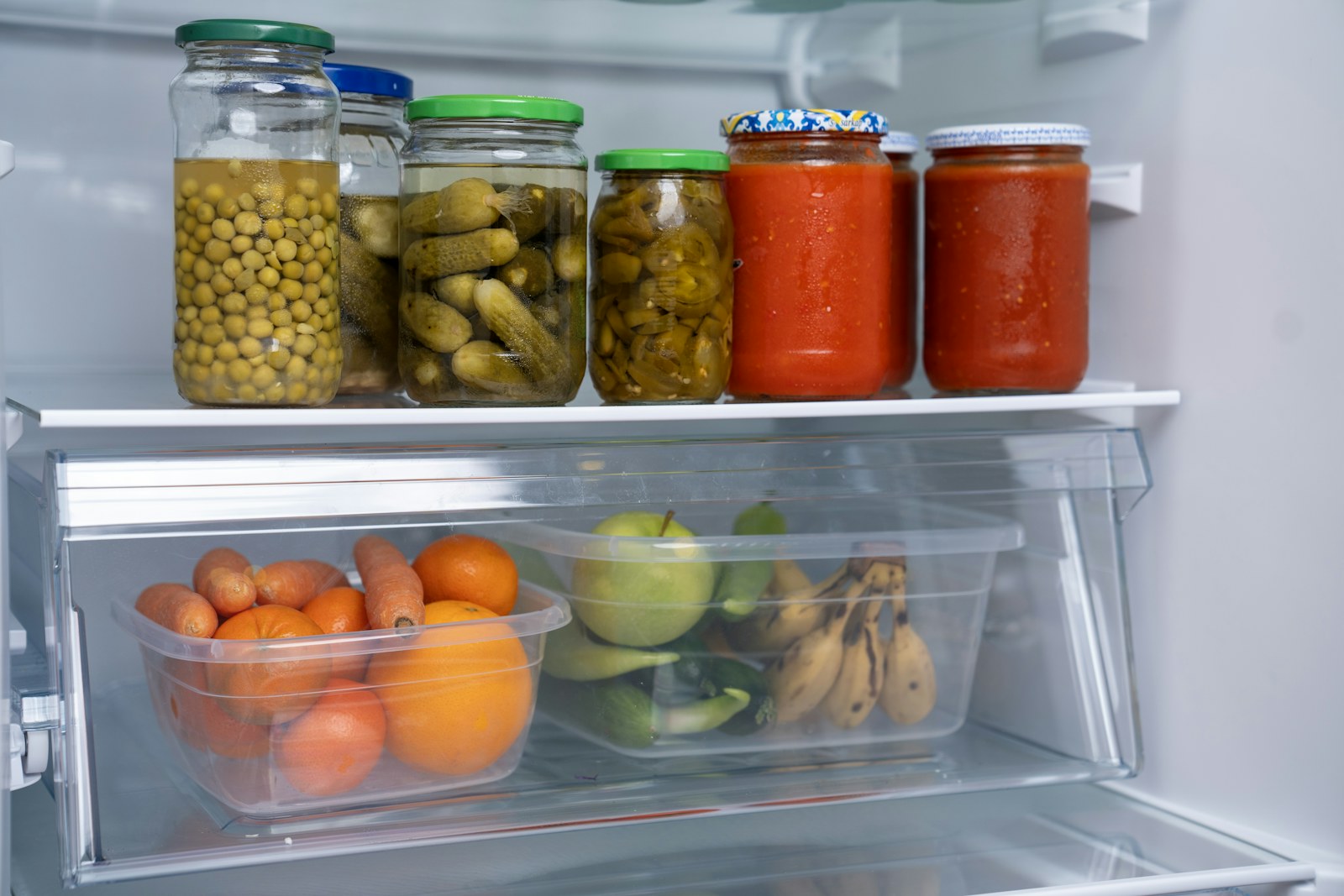
Open the refrigerator as if you were about to make lunch. What can you recognize without moving anything? Now look behind those items. A lidded bowl in the back row may contain perfectly usable food, but it has to compete with the effort of lifting three other things and trying to remember what night you cooked it. Start with that friction before buying a matched set of containers.
Choose a small, easy-to-see part of a shelf, not a whole drawer that someone has to remember to open. Put a piece of paper on its edge marked use first. Leave food in appropriate storage: greens that belong in a produce drawer can have a note on the shelf instead. Raw meat belongs contained and apart from ready-to-eat food; it does not need to move into a prominent spot to count in your plan.
I would tackle this before a grocery trip, while the shopping list can still be changed. A quick look at what is waiting gives the next meal a starting point. It also exposes the items that need a decision today: assign them to a meal, freeze suitable portions while they are safe, or discard food whose history cannot be established.
Every kitchen develops blind spots where ingredients slip out of sight. A tub of yogurt pushed behind a tall pitcher or a half-head of cabbage wedged beside the condiment jars often stays put until its texture changes. When we rely on memory alone to track perishables, items routinely vanish behind bulk purchases. The goal is not to reorganize the entire appliance into a showcase, but to create a designated zone where items demanding immediate attention sit right at eye level.
I would start by clearing out one small area of a main shelf, perhaps clearing a ten-inch strip at the front. Use it for safely stored ingredients you intend to eat next, without assuming that every item has the same remaining storage time. If you spot a half-bag of spinach or an open carton of broth, bring them forward. Do not move raw meat into this zone; raw proteins belong securely contained on lower shelves away from ready-to-eat items to prevent cross-contamination, regardless of how soon you plan to cook them.
Instead of buying elaborate clear bins, use what is already in the cupboard. A small ceramic plate or a piece of blue painter's tape on the shelf edge can mark the boundary. When family members open the door, the visual cue hits them immediately. This simple step eliminates the routine digging that makes old food invisible until it is beyond saving.
Picture a hypothetical bowl of roasted carrots left from Tuesday dinner. Simply writing carrots on a lid tells a housemate what is inside, but adding a specific target changes the outcome. Carrots, cooked Tuesday, add to Wednesday couscous tells everyone what the food is for. A short pencil note on a bit of masking tape works as well as any printed label.
If there is no realistic meal waiting for those carrots in the immediate schedule, put a second portion in the freezer promptly. Label that portion with the date and contents as well. Large packages save money only if their contents are used before spoiling, and freezing excess portions is a reliable way to bridge the gap between buying in bulk and actual consumption.
A shelf label does not restart the food-safety clock. USDA advises prompt refrigeration of leftovers, within two hours, or one hour when the temperature is above 90°F (32°C). FoodSafety.gov lists three to four refrigerated days for soups, stews and cooked meat or poultry leftovers at 40°F (4°C) or below; check the particular food. Those limits assume safe prior handling. If nobody knows when a dish was cooked or how it was stored, a new label cannot settle the question.
Before your next shop, take one minute to read the notes on your use-first shelf. If the shelf holds five containers and the household has only one lunch at home before the weekend, there is a mismatch. Reduce the next batch, freeze suitable portions earlier, or buy less of the ingredient that keeps returning. Moving everything into a larger bin solves none of those problems.
At the end of a week, count the containers that actually became meals. If one item is repeatedly passed over, ask the person who will eat it why. A meal that needs another hour of cooking is a poor promise for a short lunch break. Change the plan while you can still change the food, rather than letting good ingredients sit until they must be discarded.
Imagine you planned to eat a container of lentil soup on Thursday, but your schedule changed and you ate out instead. By Friday morning, inspect that soup. If it still falls within the three-to-four-day window for cooked leftovers and was handled safely from the start, reassign it to Friday evening or freeze it immediately. If it misses the window, let it go without guilt and adjust the next shopping list to prepare a smaller batch.
A drawer can be the right storage location and still be easy to overlook. If produce belongs in a crisper, leave it there and put a short reminder on the use-first shelf or refrigerator door. A note saying spinach in the left drawer is more helpful than moving every ingredient into the same bin. Keep the note specific enough that someone else can find the food without emptying the drawer.
Households often experience friction when two people claim the same leftovers for different meals. To prevent confusion, put a specific name or an intended meal on the container note. Keep food intended for a shared dinner distinct from individual lunch portions anyone may take. Clear ownership boundaries stop family members from accidentally dismantling tonight's dinner plan for a quick afternoon snack.
When measuring actual use, look at the pattern over two weeks rather than a single day. If you consistently find shriveled cucumbers in the crisper drawer, stop buying three-packs. That gives you a concrete adjustment to try next week. An organizer might make the drawer easier to use, but it cannot decide how much cucumber your household wants to eat.
A use-first shelf has a natural physical limit. When you can no longer fit another container or plate onto the designated strip, you have hit capacity. This overflow point is a useful warning that your kitchen has brought in more perishables than the household can reasonably consume in the current cycle.
When the shelf overflows, stop adding items and pause to process what is already there. Group similar items, pack freezer-safe containers for long-term storage, or combine related ingredients into a single pot of soup or a quick skillet meal. Freezing soup, stews, or cooked meat and poultry leftovers extends their storage life, though freezer storage durations are strictly quality guidance for food continuously frozen at 0 degrees Fahrenheit or below. Remember that freezing does not repair unsafe prior handling.
A shelf label, a pleasant smell or an unchanged appearance cannot establish that a leftover has been handled safely. Use the known cooking and storage history alongside guidance for that food. The three-to-four-day recommendation for the leftovers listed above is not a guarantee regardless of temperature or handling. If a dish was left out too long, putting it on the shelf or in the freezer does not give it a fresh start.
The foundation of low-waste kitchen planning is aligning your grocery purchases with meals actually eaten at home. It is easy to buy ingredients for five elaborate dinners while forgetting that Tuesday features soccer practice and Thursday involves a late work meeting. Designing a use-first shelf works only when your purchasing reflects your real calendar rather than an aspirational lifestyle.
Inspect existing food before you go shopping. Take five minutes to open the doors, check the crisper drawers, and review the contents of your designated shelf. If you already have half a block of cheddar and two zucchini, build them into your upcoming meal ideas before adding more to the cart. This simple habit prevents redundant purchases that inevitably crowd the refrigerator.
By focusing on what is already in front of you, the kitchen becomes a place of steady management rather than constant cleanup. A visible address for your next meal turns leftover ingredients into meal options, keeping your routine practical, straightforward, and grounded in everyday reality.
No. An existing shelf, washable plate or note can make the same signal. Buy an organizer only if you can identify a problem the simpler version cannot solve.
Put a name or intended meal on the note. Keep food intended for a shared dinner distinct from lunch portions anyone may take.
FoodSafety.gov lists three to four days for soups, stews and cooked meat or poultry leftovers refrigerated at 40°F (4°C) or below. That assumes safe handling beforehand. Check the specific food and discard items when safe handling cannot be established.
No. Freezer storage durations are quality guidance for food continuously frozen at 0 degrees Fahrenheit or below. Freezing does not repair unsafe prior handling.
Stop adding items, process what is there by freezing appropriate portions, and adjust your next grocery shop to buy fewer perishables.
A useful shelf answers what is my next meal before you open a new packet. By keeping your use-first zone compact, labeling your containers with clear meal appointments, and respecting cold storage timelines, you can manage perishables calmly without buying extra gear.
Have a correction? Contact the editors.
A practical way to separate the wording on a package from its storage history, with clear limits on what either can tell you.
A short list of usable quantities, dinner roles and missing ingredients can help more than a beautifully arranged cupboard.
Compare the route, acceptance rules and storage space before making food-scrap collection part of your kitchen.