Water & energy
Measure the Shower Before Choosing a Replacement
Separate flow, duration and compatibility so a water-saving decision starts with the shower you actually have.
One ordinary table lamp is enough to make bulb shopping confusing. I separate its job, its fitting and its light before comparing the boxes.
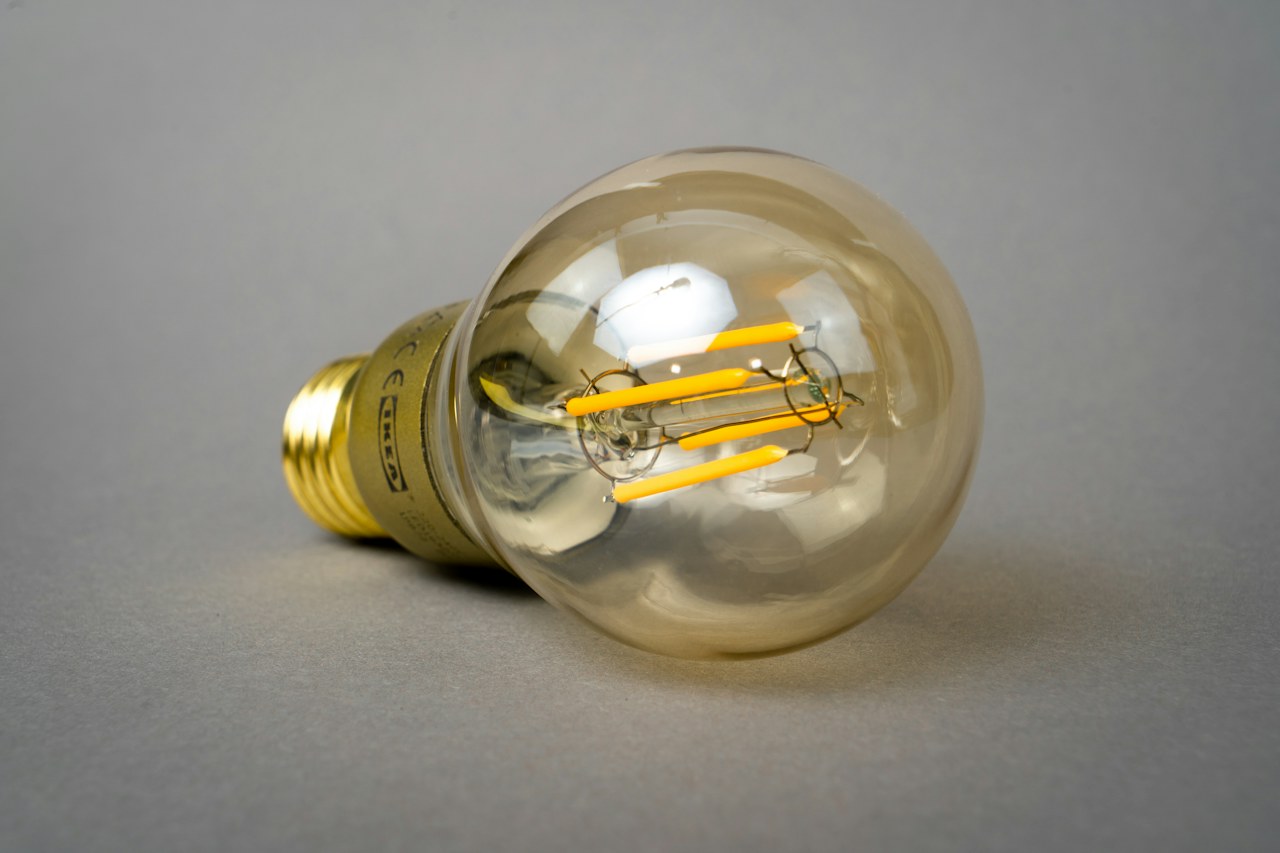
A failed bulb looks like a very small shopping problem. Yet the replacement shelf asks several questions at once: how bright, which fitting, what colour, dimmable or not, and whether a multipack is good value. My first move would happen at home. I would write a short description of the lamp and the job it needs to do, so I am comparing possible answers to one question rather than comparing every impressive number on the packaging.
For this notebook, imagine a household with a table lamp beside a reading chair. Its bulb needs replacing, and the person who uses the chair remembers that the old light felt pleasantly warm but sometimes left the page difficult to see. This is a hypothetical example, not a lighting test I conducted. I use it to show how I would turn a vague request for a better bulb into a small, checkable purchase. The scope is an ordinary indoor lamp with a user-replaceable bulb, not wiring work or a specialist fitting.
In the imagined room, I would ask the reader to describe the problem while sitting where they normally sit. Is the page hard to see, is the exposed bulb uncomfortable to look toward, or does the room feel less welcoming than they want? Those complaints may sound similar in a shop, but they are not the same request. I would write the person's own description first, without translating it immediately into brighter. The old bulb's specifications are useful evidence; they do not tell me whether the old arrangement was satisfying.
The Australian government's Energy Rating guidance distinguishes lighting for a general area from lighting for a particular activity. That distinction helps me frame the job. Here the aim is comfortable reading in one chair, not making every corner of the room equally bright. I would note when the lamp is used, whether another light is normally on, and whether the chair has moved since the lamp was chosen. This is an observation of the existing arrangement, not a professional assessment of required illumination.
A useful first sentence might be: evening reading in the chair by the window, with the ceiling light usually off. A less useful one would be: make the living room better. The specific sentence gives the household a way to judge the eventual purchase. It also stops a discount on six bulbs from becoming the answer before anyone has established that six matching replacements are needed.
My note would have two columns. The first contains requirements that a candidate must meet; the second contains things the household would like to improve. Energy Rating recommends recording the cap type and size, voltage, lumens, colour temperature and, for directional lamps, beam angle before shopping. For our table lamp, I would use its instructions and product markings to identify the relevant requirements. A photograph of readable labels can be more dependable than remembering that the base looked like an ordinary screw.
I would check the lamp's stated limits and the proposed bulb's size and permitted uses, too. A matching-looking base is not permission to ignore either product's instructions. If the lamp model or required bulb cannot be identified confidently, that unresolved question goes to the manufacturer or a knowledgeable supplier. I would not buy an adapter simply to make the nearest available bulb fit. That would change the problem instead of resolving it.
This note-taking is not a reason to dismantle a fitting or work around live parts. I would follow the lamp's instructions for any permitted user replacement, with power disconnected and the bulb cool; anything inaccessible, damaged or uncertain belongs with appropriate help. A built-in LED unit may not offer a replaceable bulb at all. In that case, I would stop applying this shopping checklist and consult its documentation. The decision to pause can be the most useful line on the page.
The US Federal Trade Commission explains the basic distinction clearly: lumens describe a bulb's light output, while watts describe power use. I would therefore record both. Replacing an old bulb with another carrying a familiar watt number is not a reliable way to reproduce its brightness across different lighting technologies. If the old bulb's lumen figure is readable, it gives me a starting point to discuss, rather than a command to buy exactly the same output regardless of the reader's complaint.
In our example, suppose the label says 800 lumens. That number belongs on the note, followed by the observation that the page was sometimes difficult to see. It does not tell me the cause. I would consider the lamp's position and shade as part of the situation before assuming that a larger lumen number solves it. I would not promise that a particular bulb output is correct for every reading chair, nor turn a package figure into a measurement of the light actually reaching this person's book.
When comparing suitable candidates, I would put like-for-like information on one line: light output, actual watts, and the other requirements already recorded. The lower-power option becomes meaningful only once the candidates can do the intended job. A low watt figure attached to an unsuitable bulb is not a successful purchase. My aim is to reduce avoidable electricity use while preserving useful light, rather than win a contest for the smallest number on the shelf.
The reader in our example liked the old light's warmth. I would preserve that information instead of assuming the complaint about visibility means they want a cooler colour. Colour temperature is expressed in kelvin; the Energy Rating guide explains that lower values describe warmer-looking light and higher values cooler-looking light. I would record the old value if known, and use the number alongside the description when comparing products. Names such as warm white are helpful shorthand, but the specification makes the comparison more concrete.
Then I would ask what should stay the same. Perhaps the household likes the appearance of the room but wants a better arrangement for reading. Perhaps someone else uses the chair for an activity in which distinguishing colours matters. Neither preference can be settled by my declaring one colour of light best for everyone. I would put the two requests side by side and look for a candidate that addresses the actual use, asking a lighting supplier for help where the requirements become more specialised.
This is also where I would avoid making a photograph do work it cannot do. A retailer's room image might be attractive, but I would not use it as a reliable preview of the same bulb in this home. The surrounding surfaces, shade and other lights differ. A picture can help someone describe a preference; the product details and the eventual experience in the actual room must carry the decision.
If our imagined lamp has an on-off switch only, I would record that. If it has a dimming control, I would identify it instead of leaving a question mark until the new bulb arrives. Energy Saving Trust warns that not all LEDs work with dimmers and that a control not designed for LEDs may be unsuitable. Its guidance recommends an electrician when a compatible control needs to be established. The Australian guidance likewise says to check which dimming systems the bulb supports.
I would take a model number or the relevant documentation to the supplier and ask a specific question about the proposed combination. Dimmable on a box is not the same as confirmation that this exact bulb and control work together. If confirmation is unavailable, I would leave the candidate off the shortlist. A cheap multipack is poor value if it gives the household several copies of an unresolved compatibility problem.
Nor would I diagnose flickering or an unexpected sound simply by shopping for a different colour or brightness. If the existing lamp is behaving abnormally, I would stop using it as appropriate and have the problem assessed rather than treat this notebook as an electrical troubleshooting guide. The shopping task works best when the fixture is known to be suitable and serviceable. It cannot make an unknown fault disappear by giving the bulb a more appealing specification.
Once two candidates meet the lamp's requirements and the household's needs, a power comparison can be useful. Here is an explicitly invented example: candidate A uses 10 watts and candidate B uses 8 watts, and both are otherwise suitable for the intended job. If each operated at that stated power for three hours every day, the annual difference would be 2 watts multiplied by 3 hours multiplied by 365, divided by 1,000: 2.19 kilowatt-hours. This is arithmetic under chosen assumptions, not a measured saving or a comparison of named products.
I would keep that result next to the assumptions. The lamp might not be used every day, and a dimmed routine may not follow the full-power calculation. Turning energy into a money estimate also requires the household's actual electricity rate. The FTC describes package energy costs and lifetimes as estimates; I would read their stated basis rather than adopt the printed annual amount as a promise about this home. A rating is useful when its conditions remain visible.
For this one-lamp decision, the calculation mainly prevents exaggeration. A modest difference between two already efficient choices does not justify ignoring comfort, suitability or purchase cost. I would compare the total decision in plain language: both fit, both provide the required light, this one uses slightly less power under the same operating conditions. If someone cannot comfortably use the lamp, the notebook is not finished, however attractive the calculation looks.
After checking the seller's return conditions, I would buy one suitable candidate where practical. In our fictional household, the reader would assess it during an ordinary evening with the chair, shade and other lights arranged normally. I would ask about the original complaint first. Is the page easier to use? Does the appearance still suit the room? Is there a reason they are avoiding the lamp? This is a household preference check, not a controlled product review or a guarantee about long-term performance.
I would write down the model and the result while the packaging is still available. If it works well, the note becomes a useful replacement record: lamp location, product identity, relevant specifications and why it was chosen. If it does not, I would record the particular mismatch rather than write LEDs are bad or brighter is always better. Specific feedback makes the next conversation with the supplier much more productive.
Finally, I would resist automatically buying the same bulb for every other fitting. The hallway, dining table and reading chair may have different jobs and requirements. A successful choice is transferable information, not a universal prescription. I would keep the useful record and repeat the short assessment when another lamp needs attention. That is a smaller project than replacing everything at once, and it leaves fewer untested purchases waiting in a cupboard.
Not as a brightness shortcut. Compare lumens for light output and actual watts for power use, while following the lamp's limits and the bulb's compatibility instructions. A familiar watt number does not establish either suitability or the right light for your task.
Kelvin describes colour temperature, not the amount of light output. Keep colour preference and lumen output as separate entries in your note. A household can want a warmer-looking light and still need to reconsider how its reading area is lit.
Do not assume so. Check the bulb and control documentation for the specific combination, and ask the manufacturer, supplier or electrician if it is unclear. Replacing or diagnosing a control is a separate task from buying a bulb.
Those uses have additional requirements. This notebook concerns an ordinary indoor table lamp; it does not establish suitability for heat, moisture or other specialist conditions. Start with the appliance or fitting manufacturer's specified replacement requirements.
The product identity and specifications make a later replacement less dependent on memory. Keep a photo or note somewhere easy to find, along with which lamp it suited. The record is especially useful when several people share responsibility for household purchases.
I would leave the shop with one considered replacement and a note I can use again. The important sequence is simple: describe the job, establish the requirements, compare light and power separately, then check the result in the room. That sequence keeps a modest purchase modest. It gives the household a reason for its choice without pretending that one bulb, one colour or one savings figure suits every home.
Have a correction? Contact the editors.
Separate flow, duration and compatibility so a water-saving decision starts with the shower you actually have.
Separate consumption, billing days and charges before deciding what a higher electricity payment means.
An observation sheet for a chilly entrance: locate the problem, establish who can change the door, and check that a proposed fix preserves its job.