Low-waste kitchen
Make a Use-First Shelf in Your Fridge
Give the next lunch a visible address, with room for the food you already bought.
A freezer label tells me what I have. Before I promise it for dinner, I also need a cold place, a realistic timetable and a second meal I can make.
I find the useful question is often one step earlier than what shall we cook. If the ingredient is frozen, where will it wait while it thaws, and what happens if the meal changes? A dinner plan can be wonderfully specific about herbs and side dishes while leaving that transition entirely unplanned. I would rather resolve the transition first than let a promising recipe create pressure to handle food unsafely.
Consider a hypothetical shared kitchen. Sam wants to cook a labelled package of frozen chicken for tomorrow's dinner; Jo may arrive late and cannot yet confirm the meal. They have a small refrigerator, a freezer drawer and another dinner available from the pantry. These are invented circumstances for working through a household choice, not an account of a meal I prepared. My focus is the refrigerator method and the decisions around it, rather than a complete cooking procedure or a universal thawing timetable.
Before making space in the refrigerator, I would read the package and the intended cooking instructions. Some commercially frozen foods are designed to be cooked from frozen. Others need a particular preparation sequence. The FDA emphasizes following the cooking instructions for commercially frozen products. I would not add a thawing stage just because it sounds like a helpful ritual, nor remove a required one because the household is running late.
In Sam and Jo's example, the first note identifies the actual package and the instructions they will use. Frozen chicken is not a sufficiently precise plan by itself. The size and form of the item, its packaging and the intended recipe all matter to the practical question. They do not need a second inventory app; they need to connect this particular item to a suitable method before it leaves the freezer.
I would also separate ordinary meal planning from an uncertain storage history. If nobody knows whether the package remained safely frozen, a neat new label cannot settle that question. Consult the relevant food-safety guidance rather than treating the planned cooking step as a repair for earlier mishandling. The rest of this example assumes an identifiable item that has been stored appropriately; uncertainty about that assumption changes the task.
The FDA advises keeping refrigerators at or below 40°F, expressed in its guidance as 4°C, and checking appliance temperatures with a thermometer. A light inside the appliance is not a temperature reading. I would check the appliance before deciding that the space is suitable, particularly if the household has recently noticed a problem. This guide does not diagnose an unreliable refrigerator or establish the safety of food after a power failure.
Next comes the physical location. NSF describes placing wrapped food in a pan on a bottom shelf, away from other foods, to contain drips during refrigerator thawing. In the imagined kitchen, Sam would find a suitable container and a space where it sits securely. I would check the arrangement before moving the package, so there is no awkward interval with an uncontained item waiting while someone reorganizes a crowded shelf.
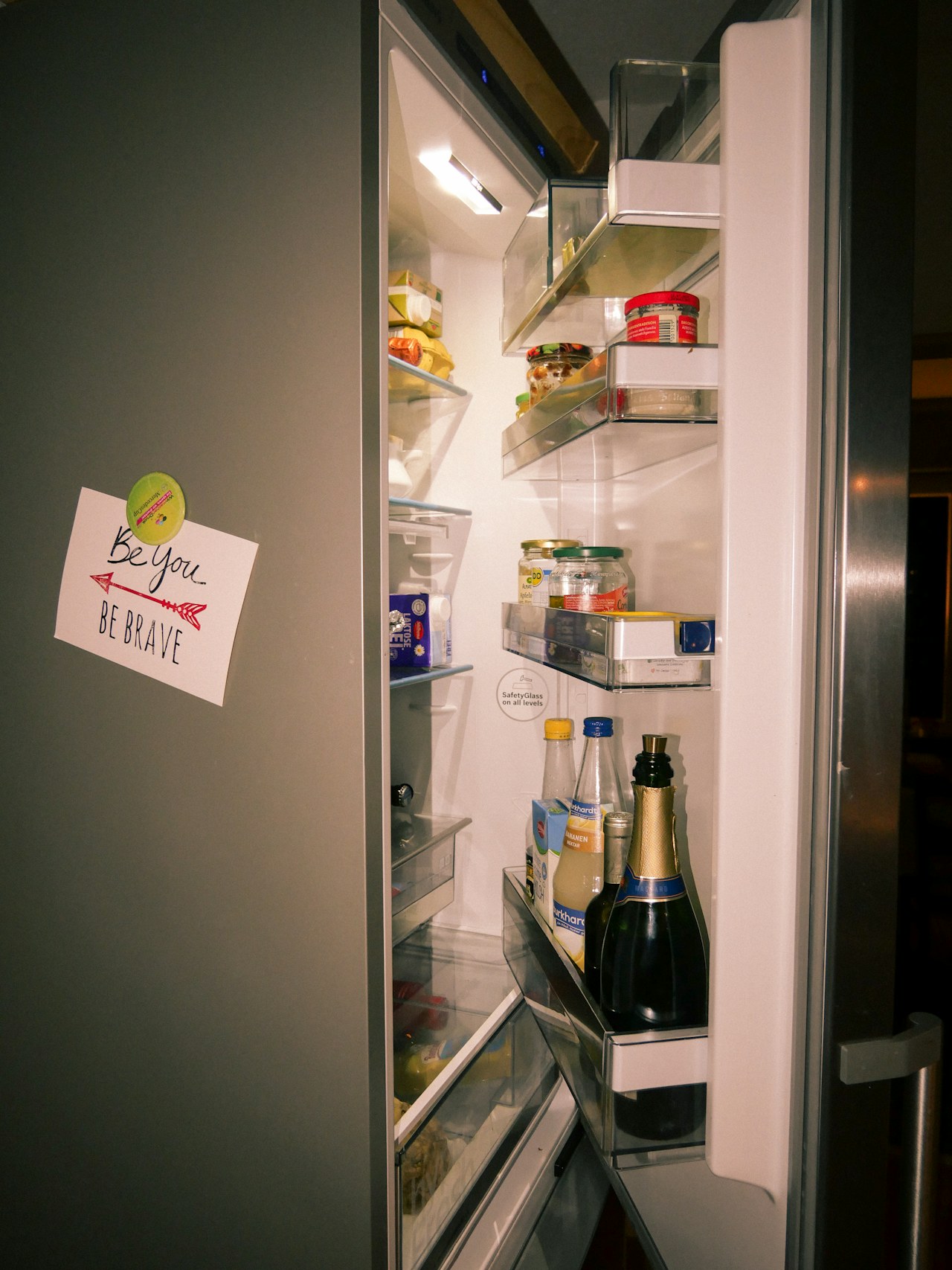
The photograph accompanying this article shows an ordinary refrigerator, not an approved storage arrangement or an appliance whose temperature I measured. That distinction matters to the example too. A tidy-looking shelf does not prove safe handling. My useful household question is narrower: where can this contained package wait without interfering with ready-to-eat food or making the refrigerator so crowded that its contents become difficult to manage?
Refrigerator thawing needs advance planning. NSF explains that the time can be substantial and varies with the food; its examples should not become a promise for every package. I would not assign Sam's chicken a guaranteed finishing time from a photograph or a casual weight estimate. Instead, the household can choose the appropriate guidance for the actual item and allow the meal plan to remain conditional.
Tomorrow's dinner therefore has two possible versions. If the ingredient is ready and the applicable handling instructions can be followed, the planned recipe remains available. If not, the pantry meal becomes dinner. That is an editorial planning choice, not a claim that a particular package will thaw within a day. The alternative is useful precisely because it does not require somebody to accelerate thawing on the kitchen counter.
I would keep the alternative simple enough to be real. An elaborate second recipe needing another frozen ingredient merely recreates the problem. In this hypothetical household, an available pasta meal serves the purpose. Another household would choose differently. The point is to give the cook permission to change the menu without framing safe handling as an obstacle to keeping a promise made before the ingredient was ready.
My note would say which item is being handled, where its instructions are, when it moved into the refrigerator and who is expecting to cook it. Those are observations and responsibilities, not a new safety certification. The date is useful because the next person should not have to guess whether a package appeared this morning or several days ago. Food-specific guidance still determines the relevant storage limits.
For example, Sam might write: chicken package in the covered tray on the lower shelf; moved from the freezer on Tuesday evening; package instructions kept with the meal note; Sam will review the plan before cooking. The example intentionally avoids inventing a universal use-by date. An actual note needs the actual food and instructions. I would rather leave an unanswered question visible than fill the space with a reassuring but unsupported deadline.
Jo can then understand the arrangement without disturbing the package to investigate it. If Jo will cook instead, the handover needs confirmation rather than an assumed transfer of responsibility. A household reminder might prompt that conversation, but it should not be presented as the manufacturer's deadline. Keeping those two kinds of date separate makes the note more useful and prevents a convenient calendar entry from acquiring authority it never had.
Suppose Jo's arrival moves later and the household decides to eat elsewhere. I would revisit the ingredient promptly, using the current food-specific guidance and its actual handling history. I would not simply push the original meal to the same day next week. A meal plan can move freely on paper; a perishable food does not acquire a fresh storage period each time its recipe is rescheduled.
The useful conversation is concrete: who will now deal with this item, using which suitable route, and when will that happen? The answer may be a different appropriate meal arrangement or another option supported by the relevant guidance. This article does not supply a blanket rule about refreezing every food or every thawing method. If that is the proposed change, consult guidance that actually covers the item, method and condition.
I also would not slide the package into an unrelated leftovers area just to clear the shelf. The temporary arrangement still needs to remain understandable to the next person opening the door. The household's responsibility is to resolve the food decision as well as the space problem. Making the shelf look empty while losing track of the package is a visual improvement that leaves the more important work unfinished.
The refrigerator is not the only recognized thawing method. NSF also describes cold-water and microwave methods, with immediate cooking following those methods and specific handling steps. I would read the complete instructions before choosing either, rather than taking the word faster as permission to improvise. They are separate procedures with requirements, not quick finishing touches that can be added casually to an interrupted refrigerator plan.
That is why I would not turn a busy evening into a comparison of shortcuts in this example. Sam and Jo selected a refrigerator-based routine because it fits the arrangement they can manage. If circumstances change enough to require another method, someone needs to take responsibility for that complete procedure. A half-read instruction, an unattended task or an assumption that the other roommate will finish it is not a practical plan.
NSF specifically warns against room-temperature thawing because the outside can warm while the middle remains frozen. A cold-feeling centre is therefore not the permission I would use to leave a package on the worktop. Nor would I taste food to settle a safety question. The household can choose a different meal while it resolves the handling question through appropriate guidance; finishing the original menu is not the only acceptable outcome.
Once the item has been handled appropriately, I would remove or update the temporary note and clean the holding arrangement as needed. This is a small but useful distinction from a permanent freezer inventory. The inventory answers what is available; the temporary note answers what is happening to one item now. Leaving outdated action notes in place makes the next handover harder because readers must first work out which instructions still apply.
I would review one practical friction rather than grade the household. Was the containing dish unavailable? Did the meal depend on someone whose evening was uncertain? Did both people assume the other was checking the instructions? Those observations can lead to a modest adjustment: keep an appropriate dish accessible, confirm the cook earlier, or choose a menu with a realistic alternative. No shopping list of specialist equipment is automatically required.
The next attempt should be simpler to understand, not more elaborate to administer. I would keep whatever helped the food remain identifiable, appropriately handled and connected to an actual meal decision. If the routine produced several reminders but no clear responsibility, I would shorten it. A useful thawing plan is a bridge between storage and cooking, with enough information for a person to make the next decision responsibly.
No. NSF explains that the outside can warm while the centre remains frozen during unsuitable thawing. Use the appropriate method and handling history rather than a reassuring touch test. The FDA also notes that food can be unsafe without an obvious change in appearance or smell; tasting is not a safety check.
No universal rule applies to every product. Read its instructions and use guidance appropriate to the actual food and cooking method. Some commercially frozen products have specific cooking directions, which the FDA says to follow. Do not invent a thawing stage or skip a required one to make the timetable easier.
Identify the item, its location, when it moved, the instructions being followed and the person responsible for the next decision. Keep any food-specific limit distinct from a household reminder. The note is a practical record; it cannot extend a storage period or prove that an uncertain earlier history was safe.
Use a realistic alternative meal rather than an improvised warming shortcut. If considering another recognized thawing method, read and follow its complete requirements, including the cooking stage. The original dinner arrangement was provisional. Changing the menu is often a more manageable decision than changing the food-handling procedure under pressure.
The cover is an illustrative photograph, not a tested example of this method. Plan for your appliance, package, container and current guidance. A photograph does not establish refrigerator temperature or the handling history of its contents. Follow the actual instructions and keep raw-food handling separate from ready-to-eat food.
I would finish this planning exercise with one identified package, an appropriate cold location, a named cook and a menu that can change. The value is not a clever shortcut. It is the removal of a predictable moment of pressure: dinner is approaching, the ingredient is not ready, and nobody knows who is deciding what happens next. A small, accurate note and an ordinary second meal can make that moment easier to handle.
Have a correction? Contact the editors.
Give the next lunch a visible address, with room for the food you already bought.
A practical way to separate the wording on a package from its storage history, with clear limits on what either can tell you.
A short list of usable quantities, dinner roles and missing ingredients can help more than a beautifully arranged cupboard.